

News details
How do we want to live in our old age?
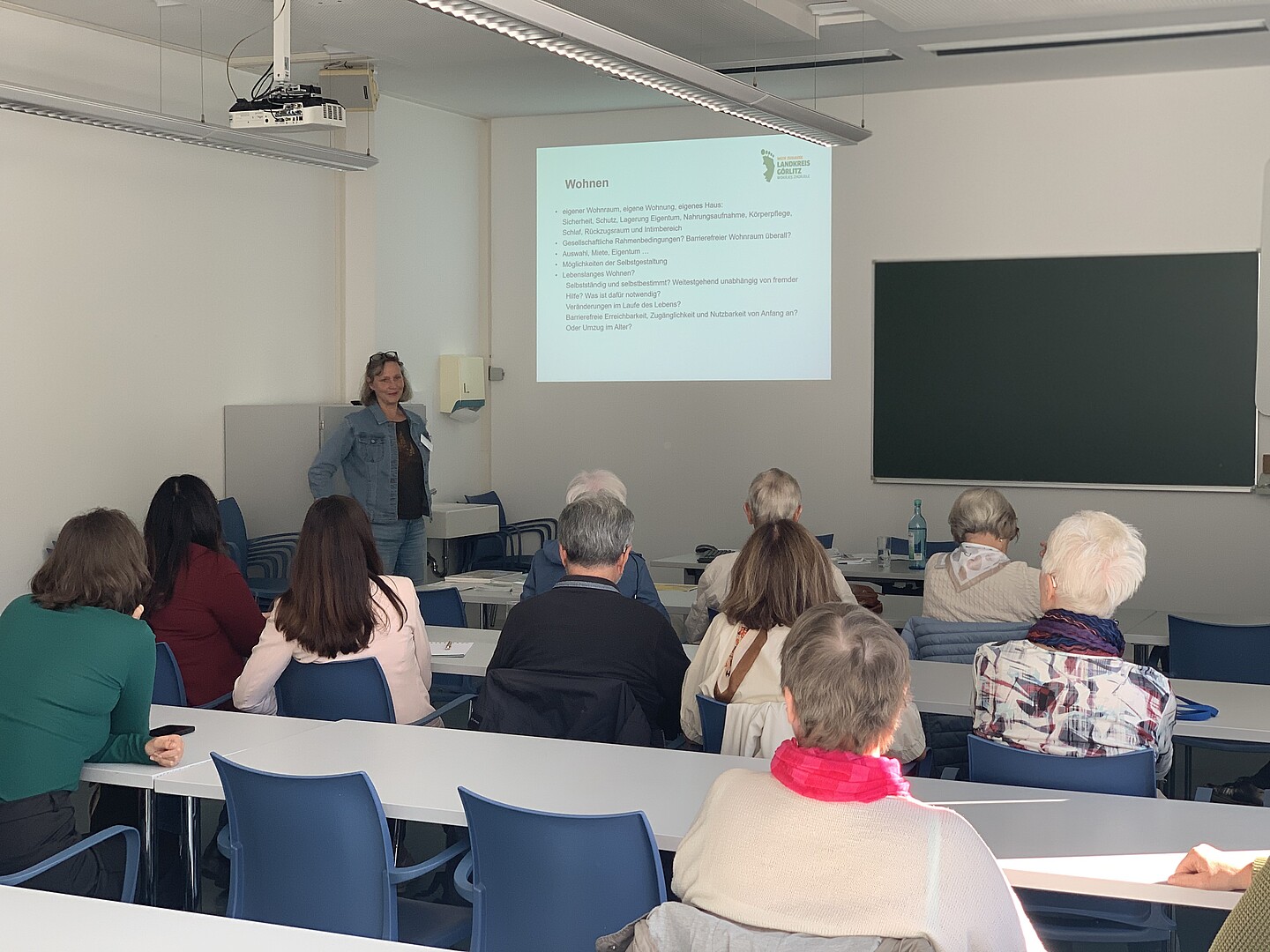
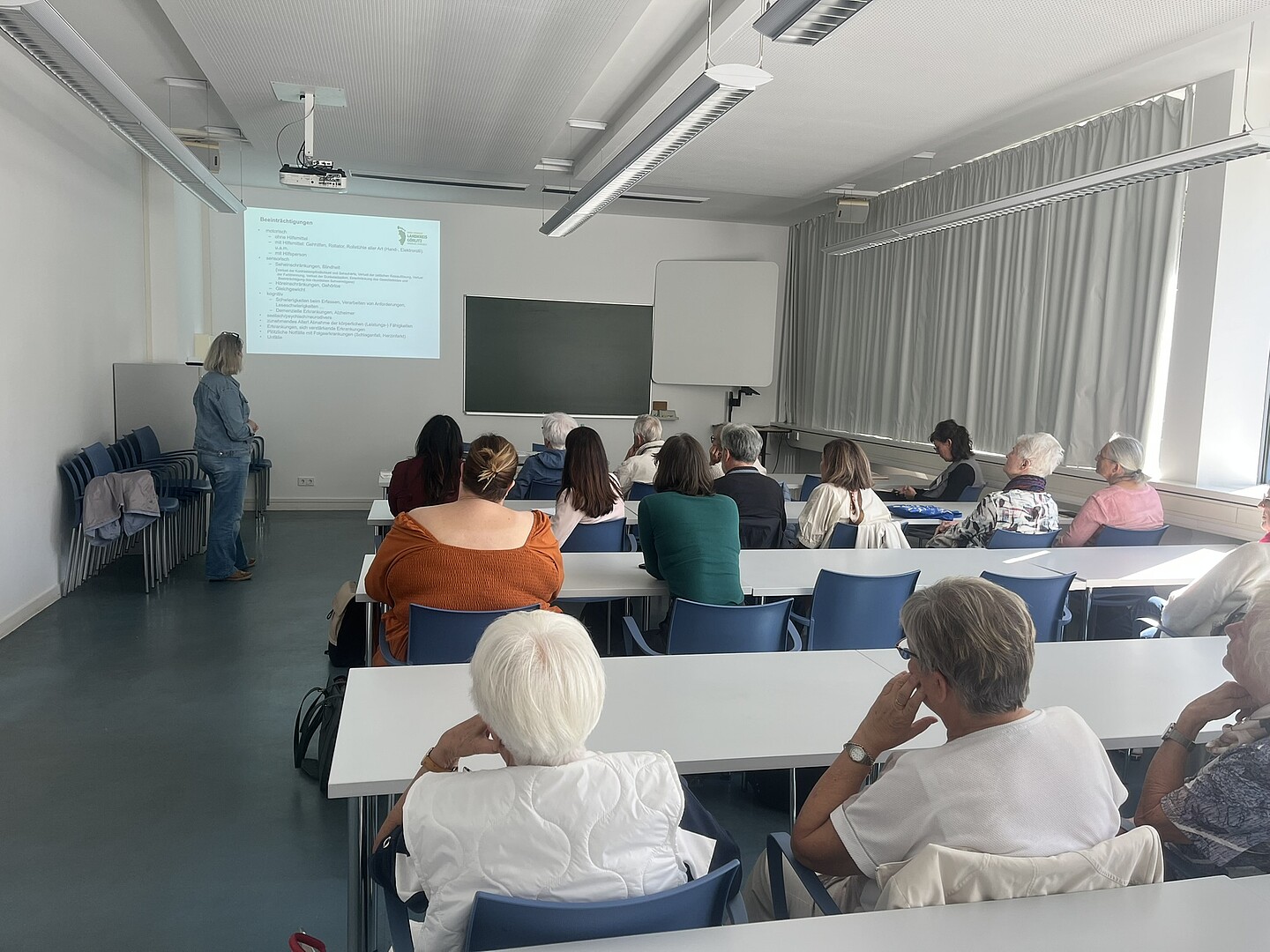
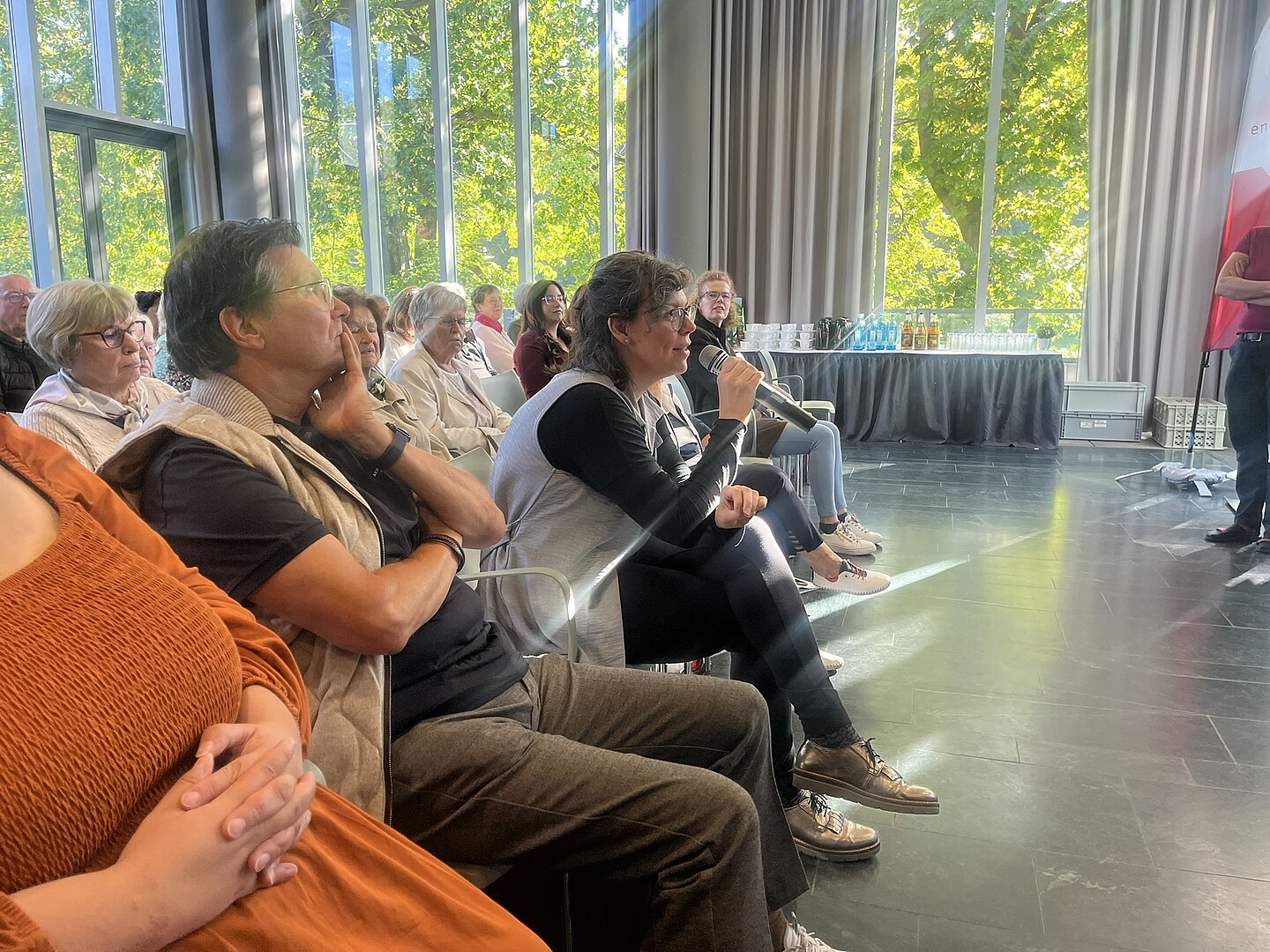
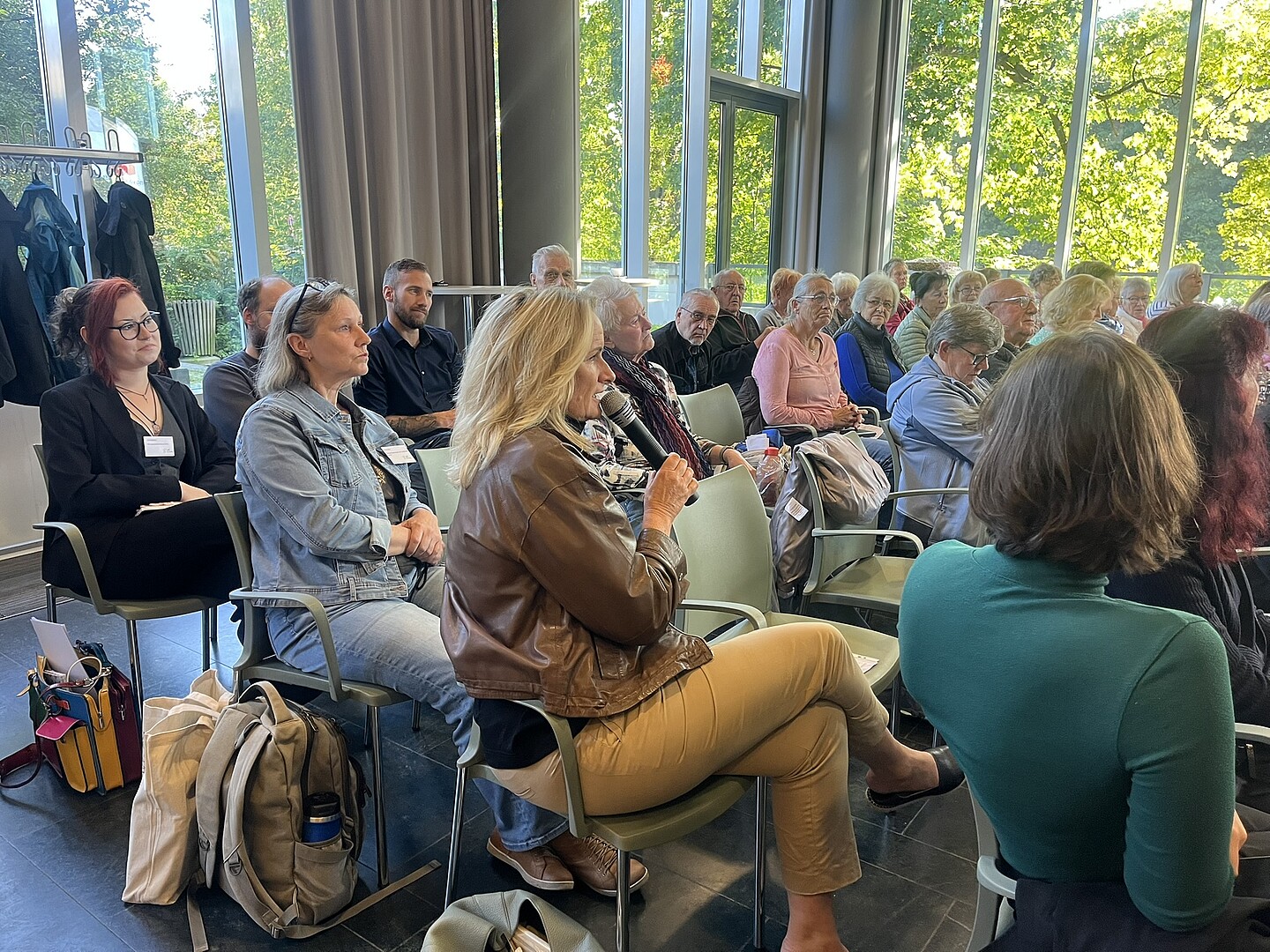
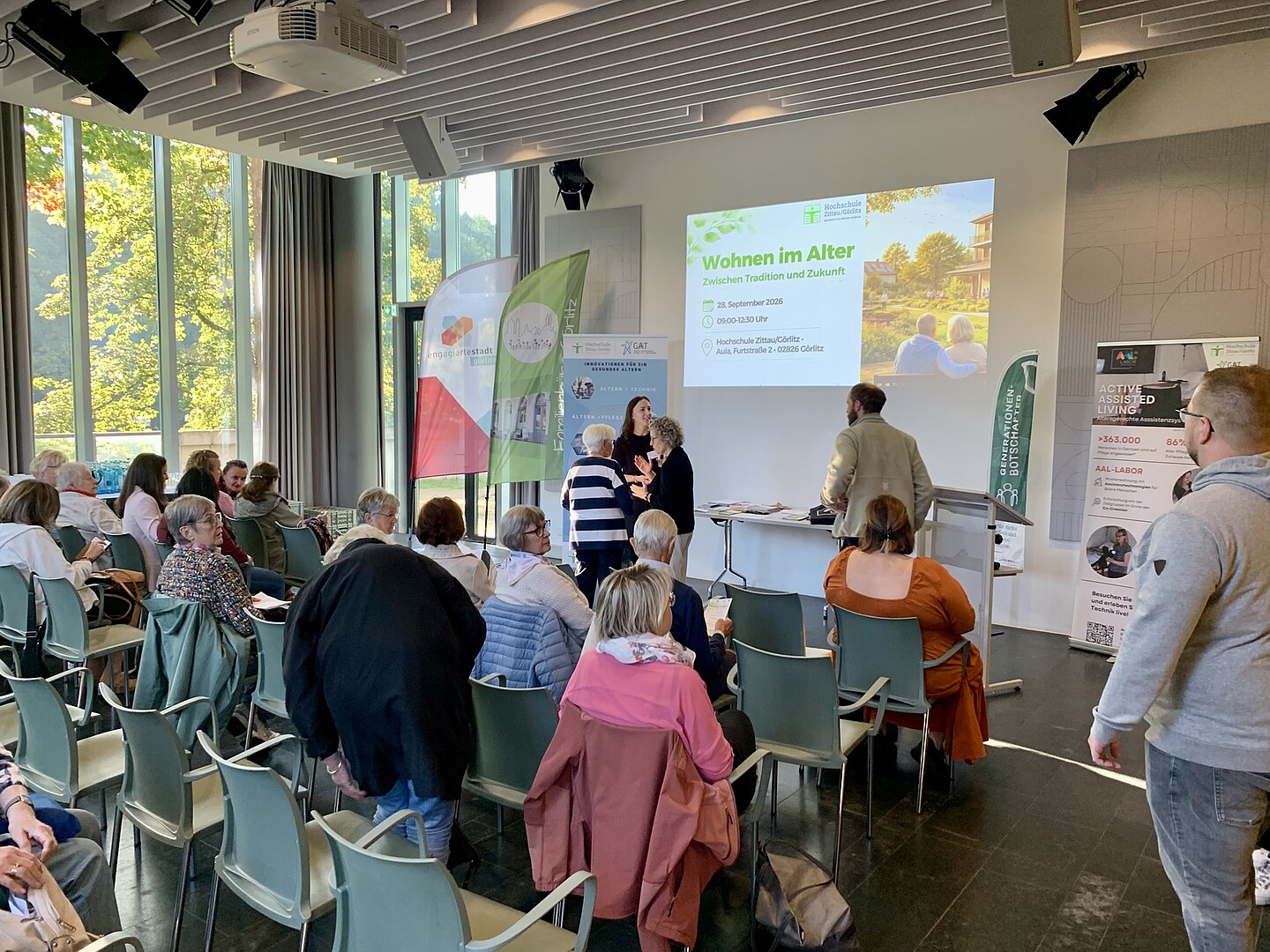
On September 28, 2026, in Görlitz, experts from academia, the professional field, and civil society gathered at the GAT Institute’s theme day, “Housing for the Elderly—Between Tradition and the Future,” to discuss current approaches to self-determined living in old age.
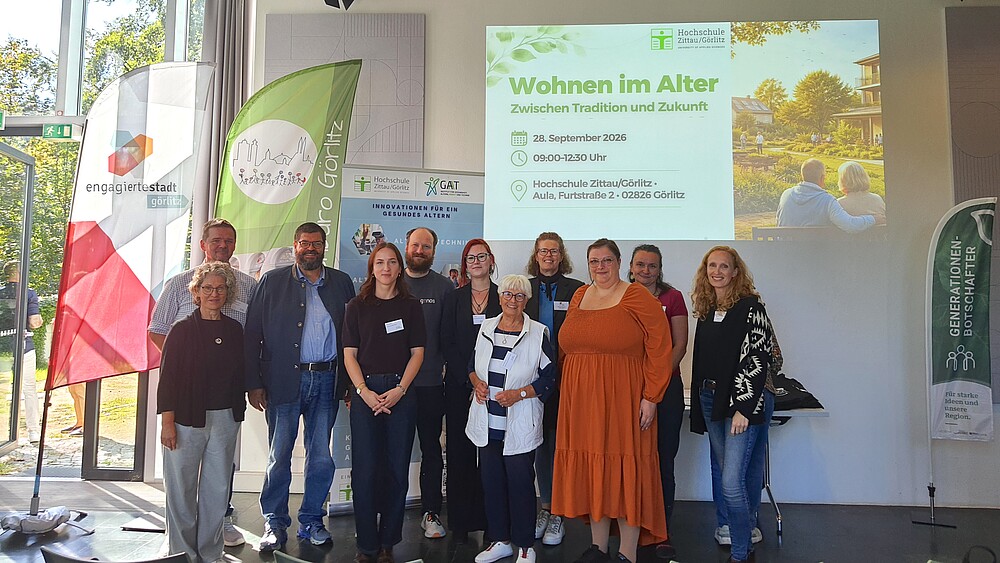
Opening of the Theme Day
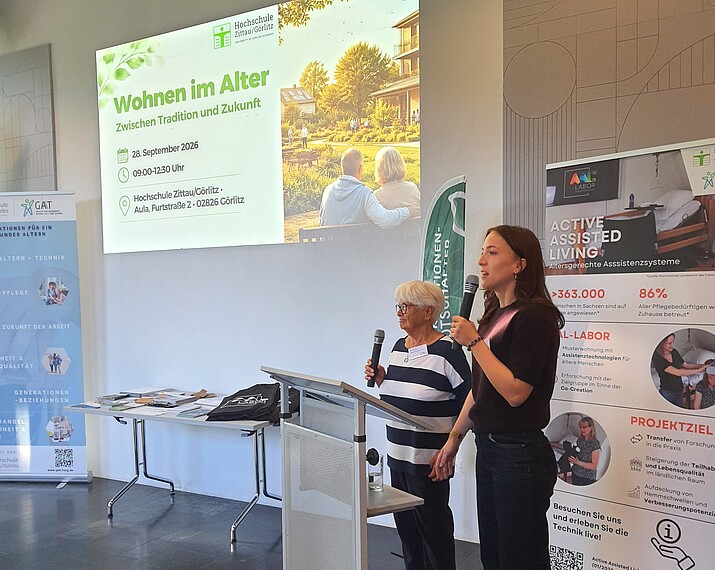
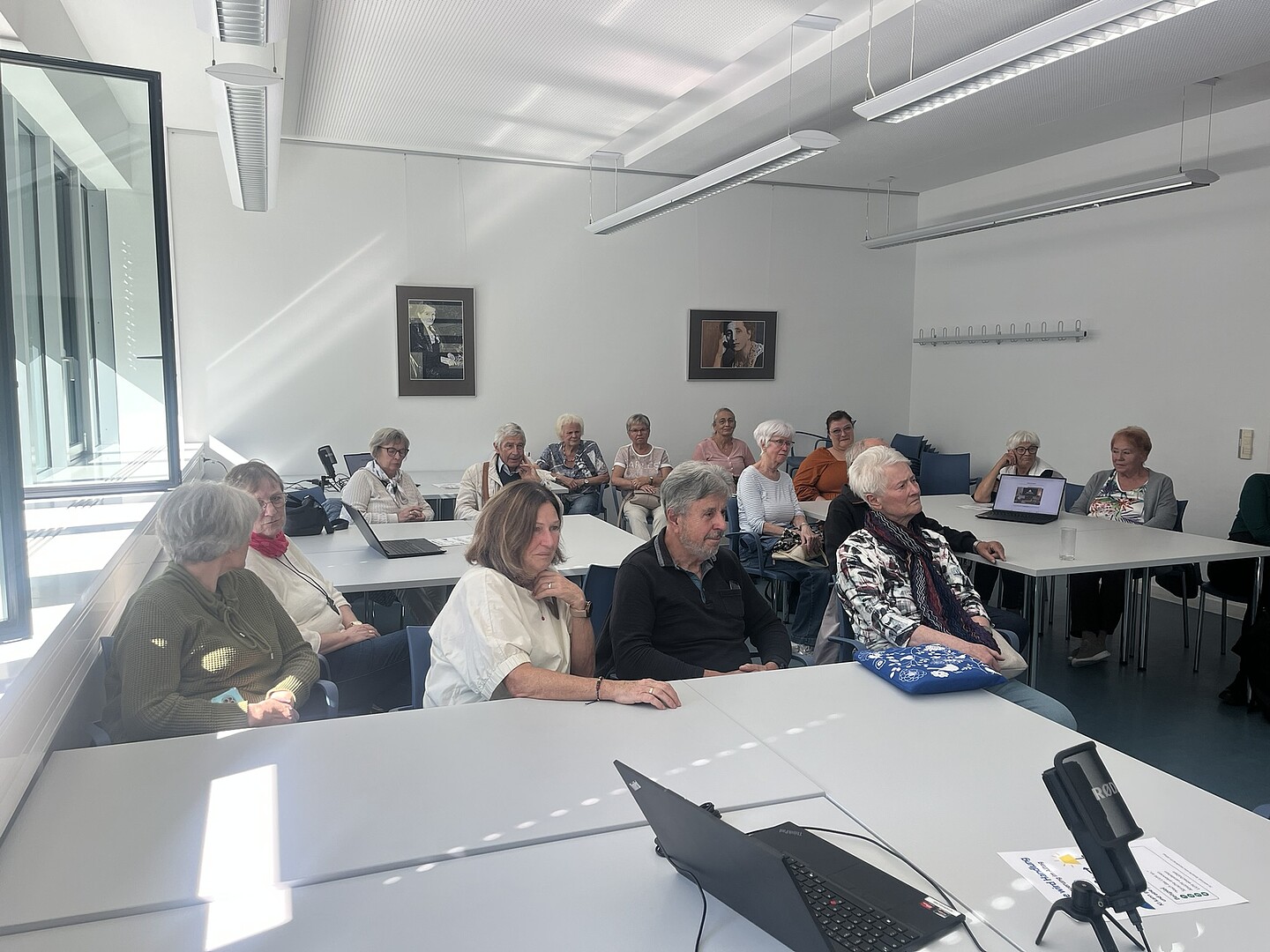
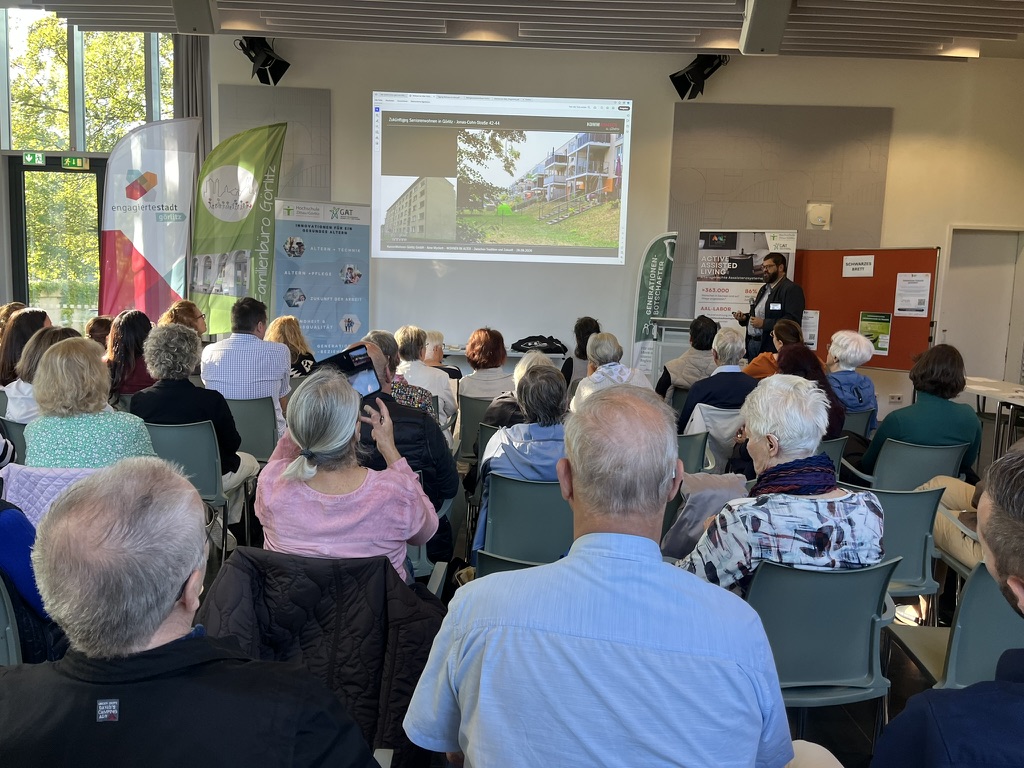
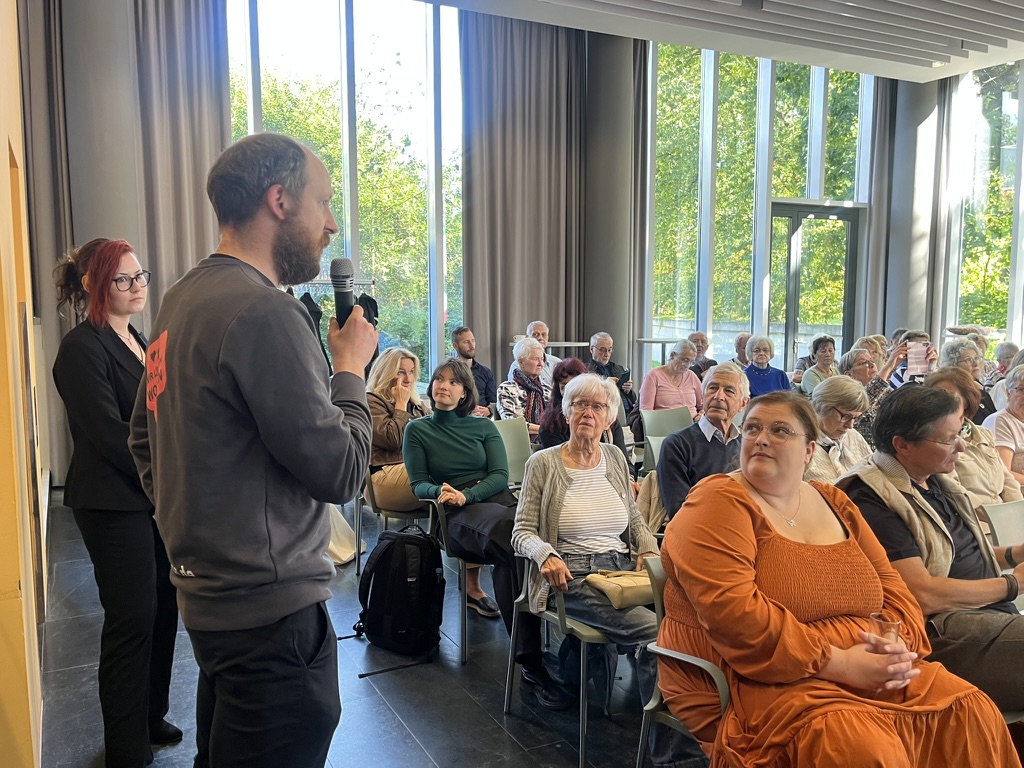
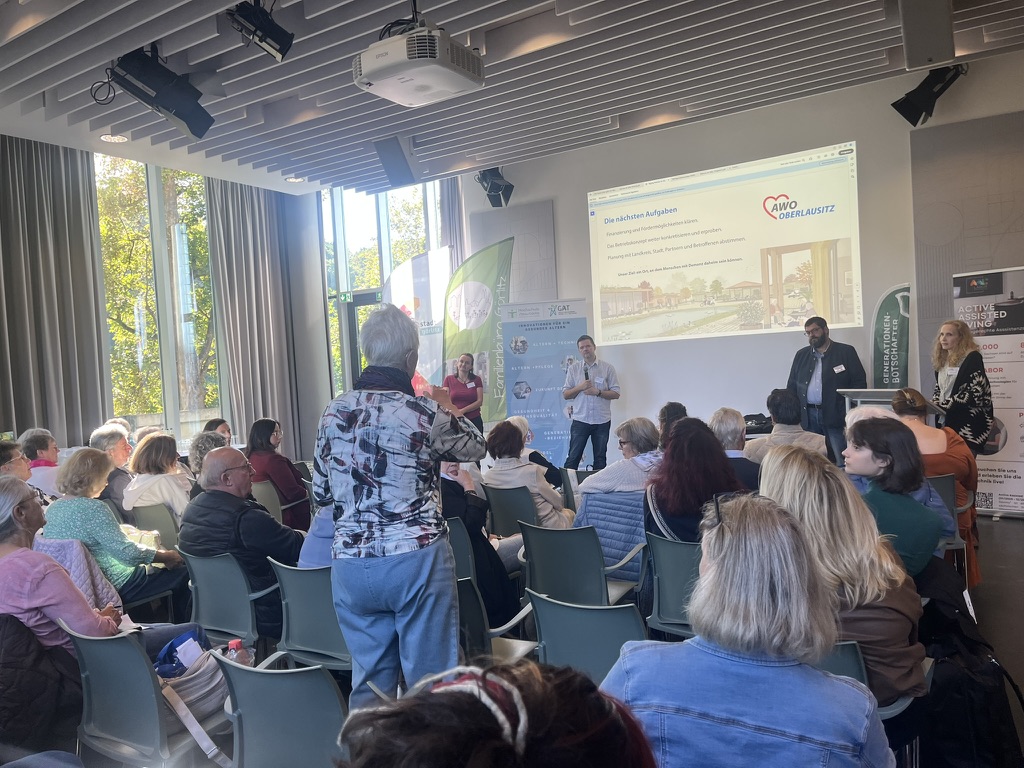
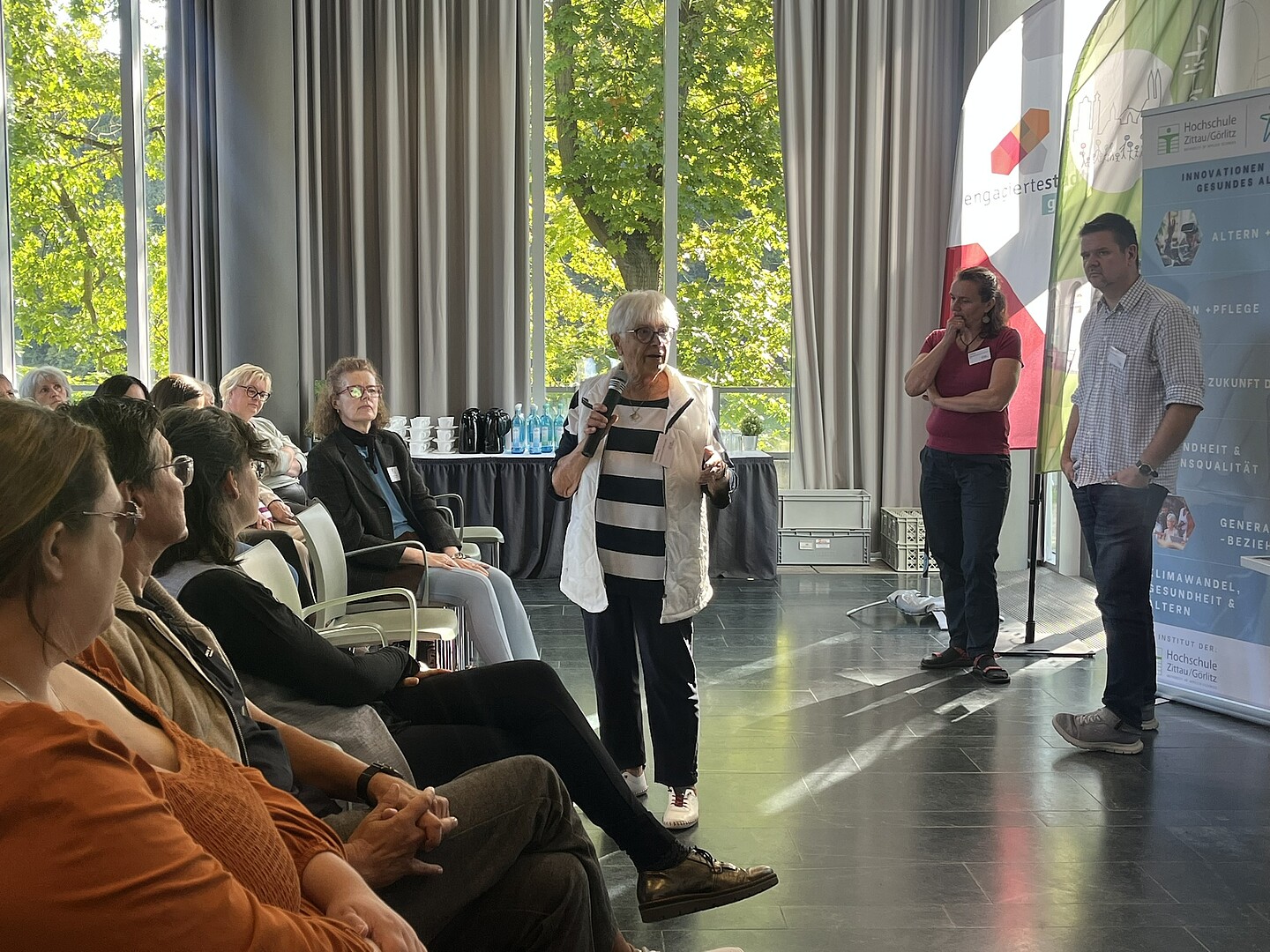
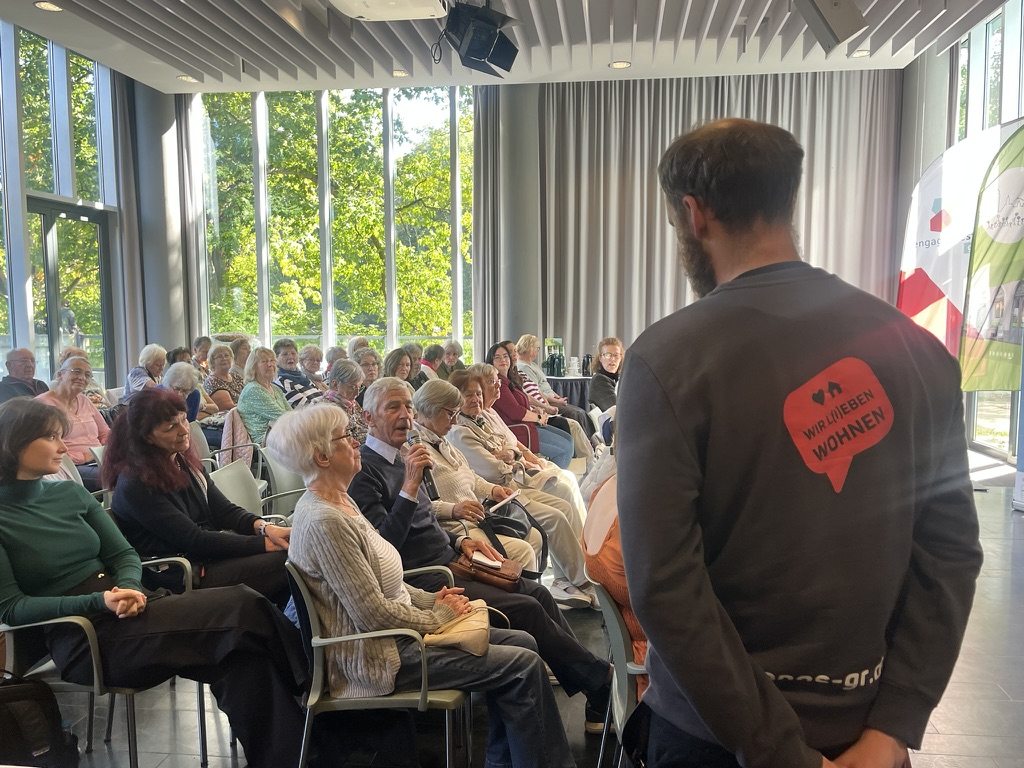
For the third time, the GAT Institute, together with the Görlitz Family Office, the Engagierte Stadt Görlitz, and the Görlitz District Senior Citizens’ Council, hosted a theme day. Around 60 interested citizens, as well as experts from academia and the field and regional stakeholders, gathered on September 28, 2026, in Görlitz to discuss one of the central social issues of our time.
Maria Fabisch from the GAT Institute’s Saxony5 project opened the event, which highlighted diverse forms of housing, provided information on social structures and barrier-free housing adaptations, and took a look at smart technologies.
Insights from Science
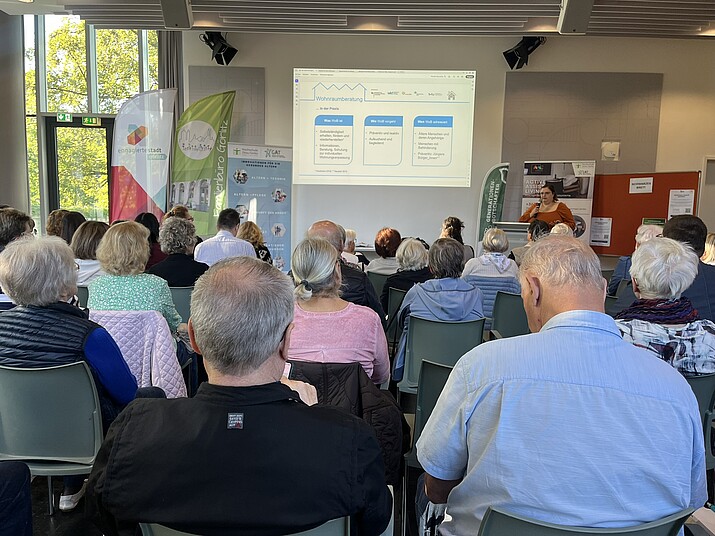
Sarah Kautz from the BTU Cottbus-Senftenberg presented findings from the research project “Professionalization of Housing Counseling in Brandenburg” (ProWoB).
Her research shows that, in practice, housing counseling usually only takes place in acute crisis situations, and preventive potential often remains untapped. Furthermore, the presentation highlighted that housing is a complex social phenomenon shaped by norms, values, and economic conditions, and that counseling must therefore be sensitive and holistic.
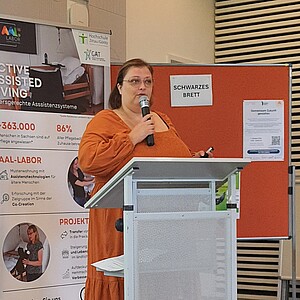
Wohnraumberatung und Wohnungsanpassung können ein Weg sein, wie ältere Menschen sicher und selbstbestimmt in ihrer eigenen Wohnung wohnen bleiben können. Wichtig dabei ist jedoch, sich rechtzeitig Gedanken um seine Wohnwünsche im Alter zu machen. Ihr größtes Potenzial hat die Wohnberatung als präventives Angebot, nicht in der Krisenintervention. Umso wichtiger ist es, dass Strukturen zur neutralen, unabhängigen und nicht gewinnorientierten Wohnraumberatung für ältere Menschen in allen Bundesländern zur Verfügung stehen.
”Block 1: Housing Options for Older Adults – Real-World Experiences
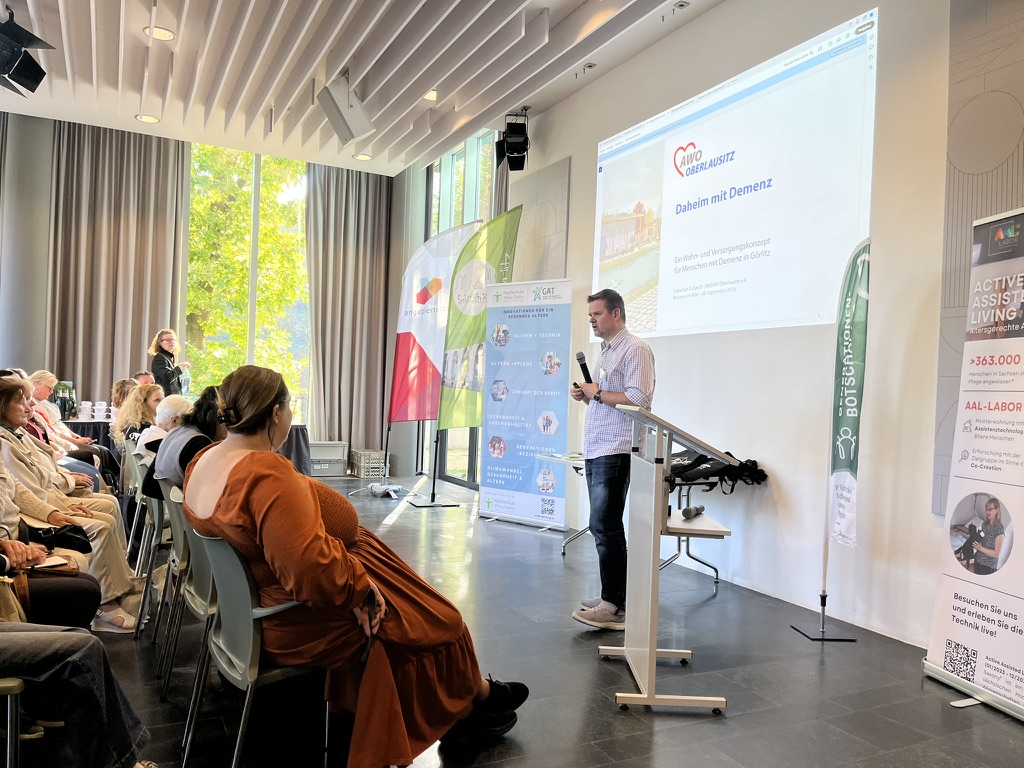
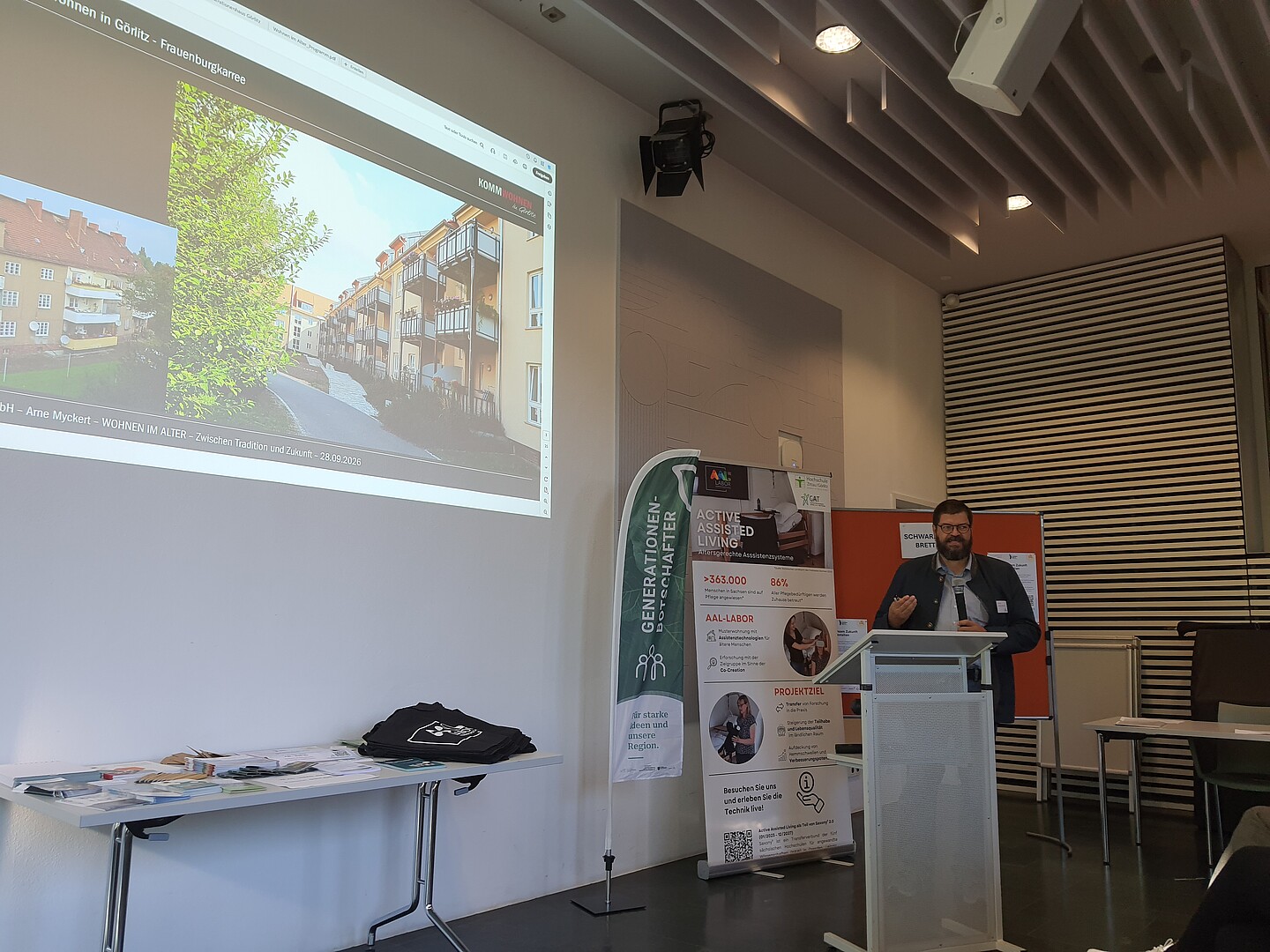
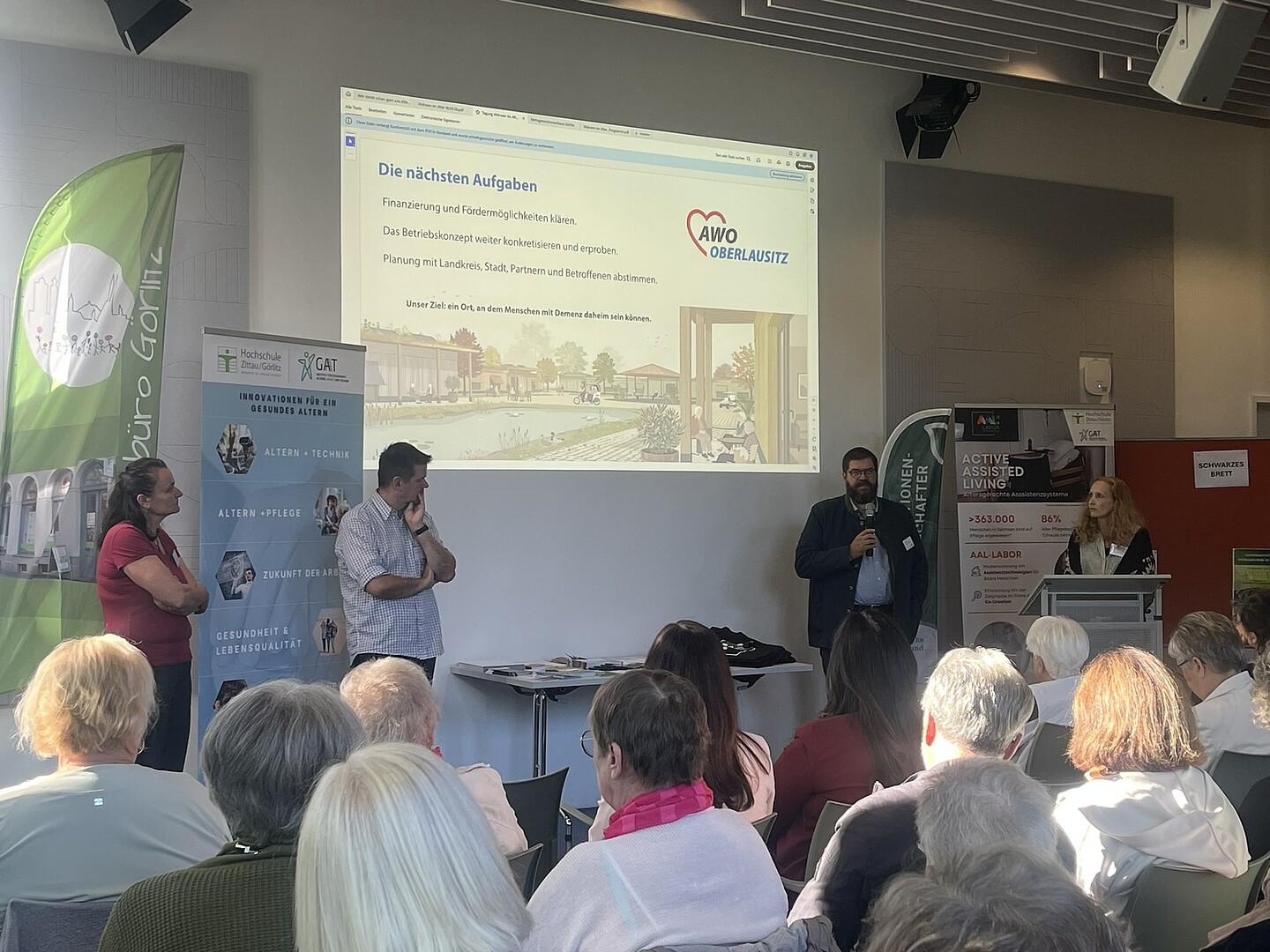
In the subsequent session on diverse forms of housing, three perspectives were presented: The Miteinander Füreinander Jung und Alt Görlitz e.V. association spoke candidly about its experiences—and the limitations—of intergenerational communal living. Arne Myckert (KommWohnen) presented concrete ideas for what senior housing in Görlitz might look like in the future. Finally, Sebastian Kubasch ventured a look into the more distant future and spoke about the housing and care concept for people with dementia in Görlitz.
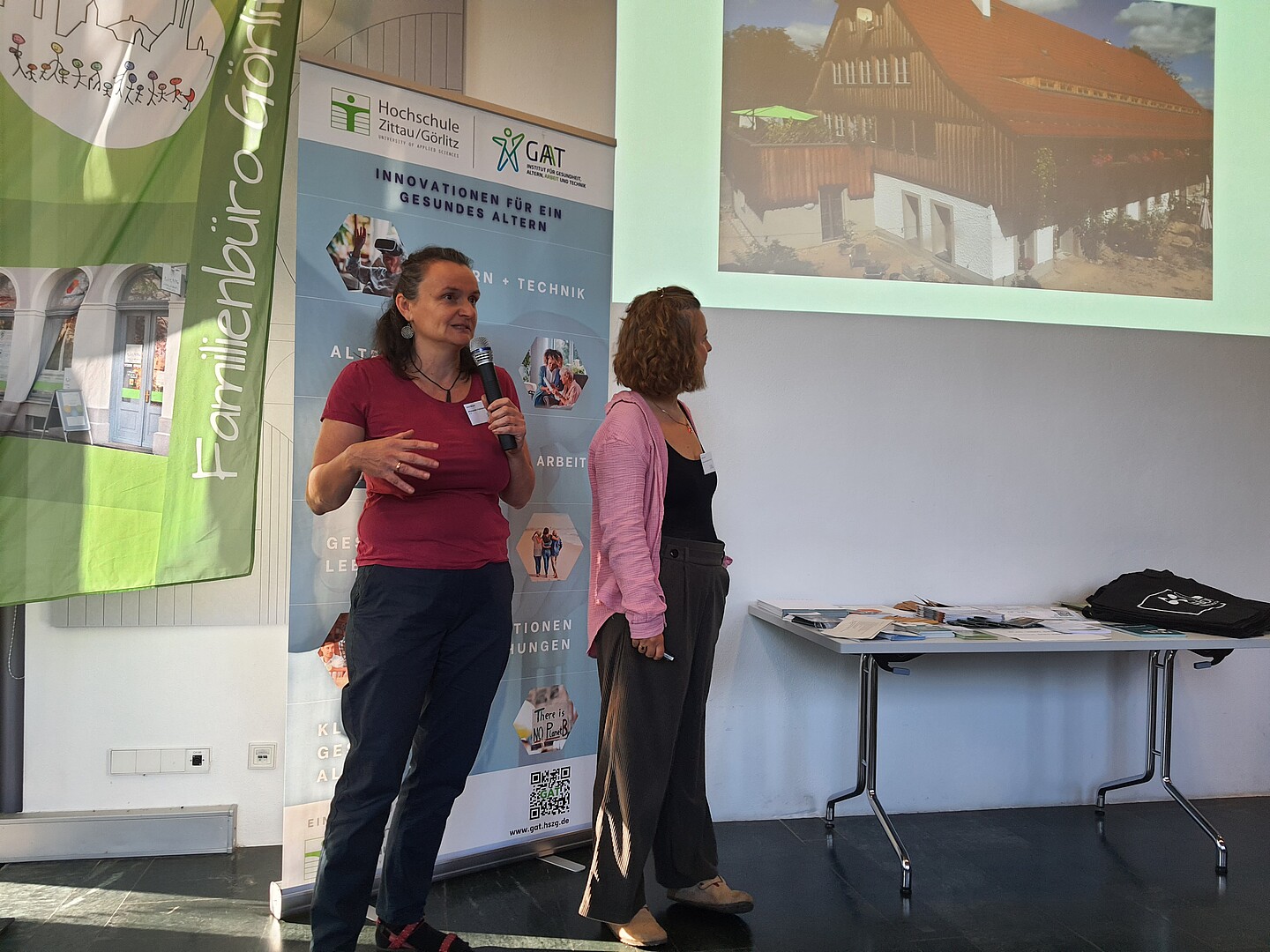
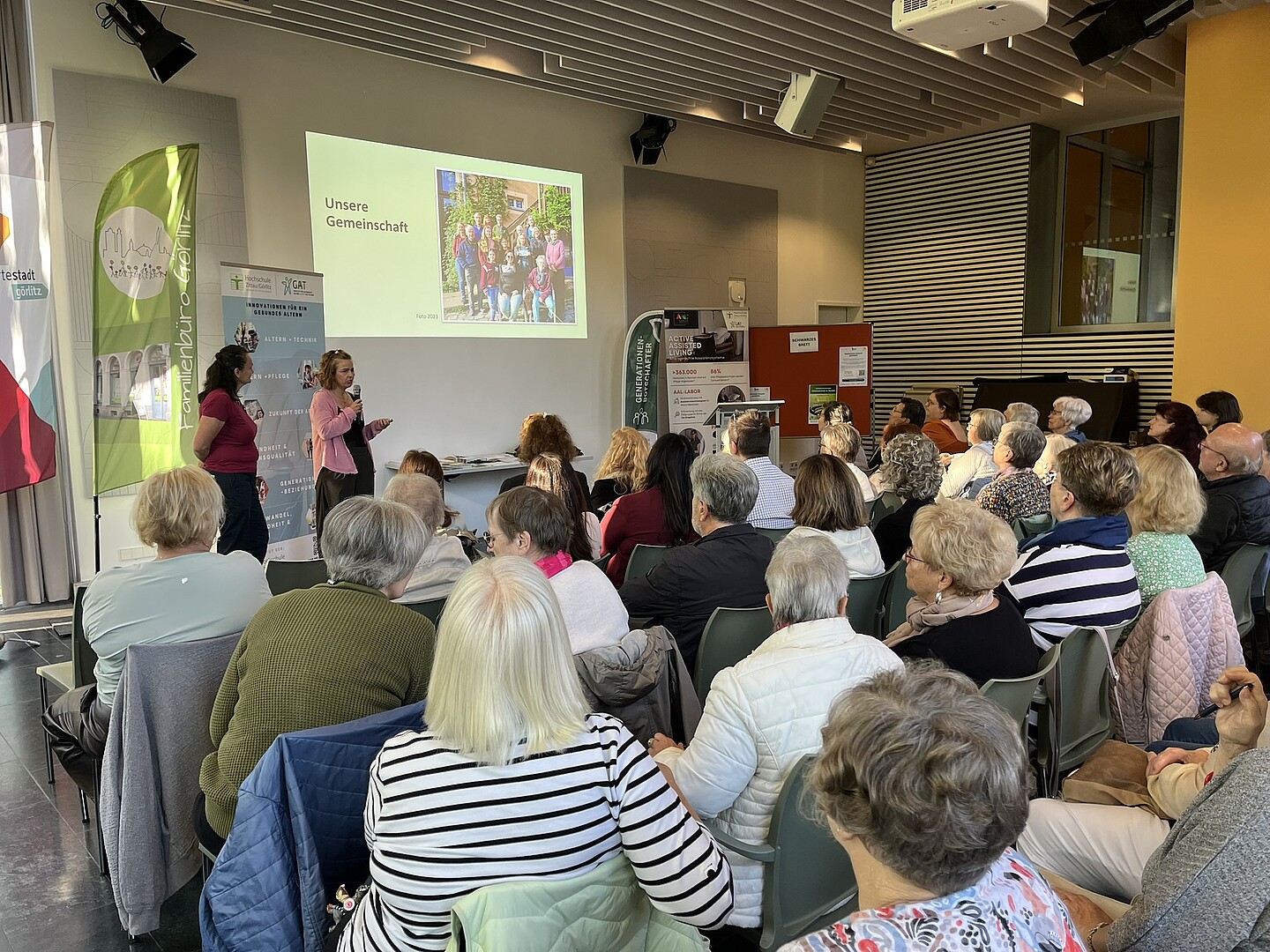
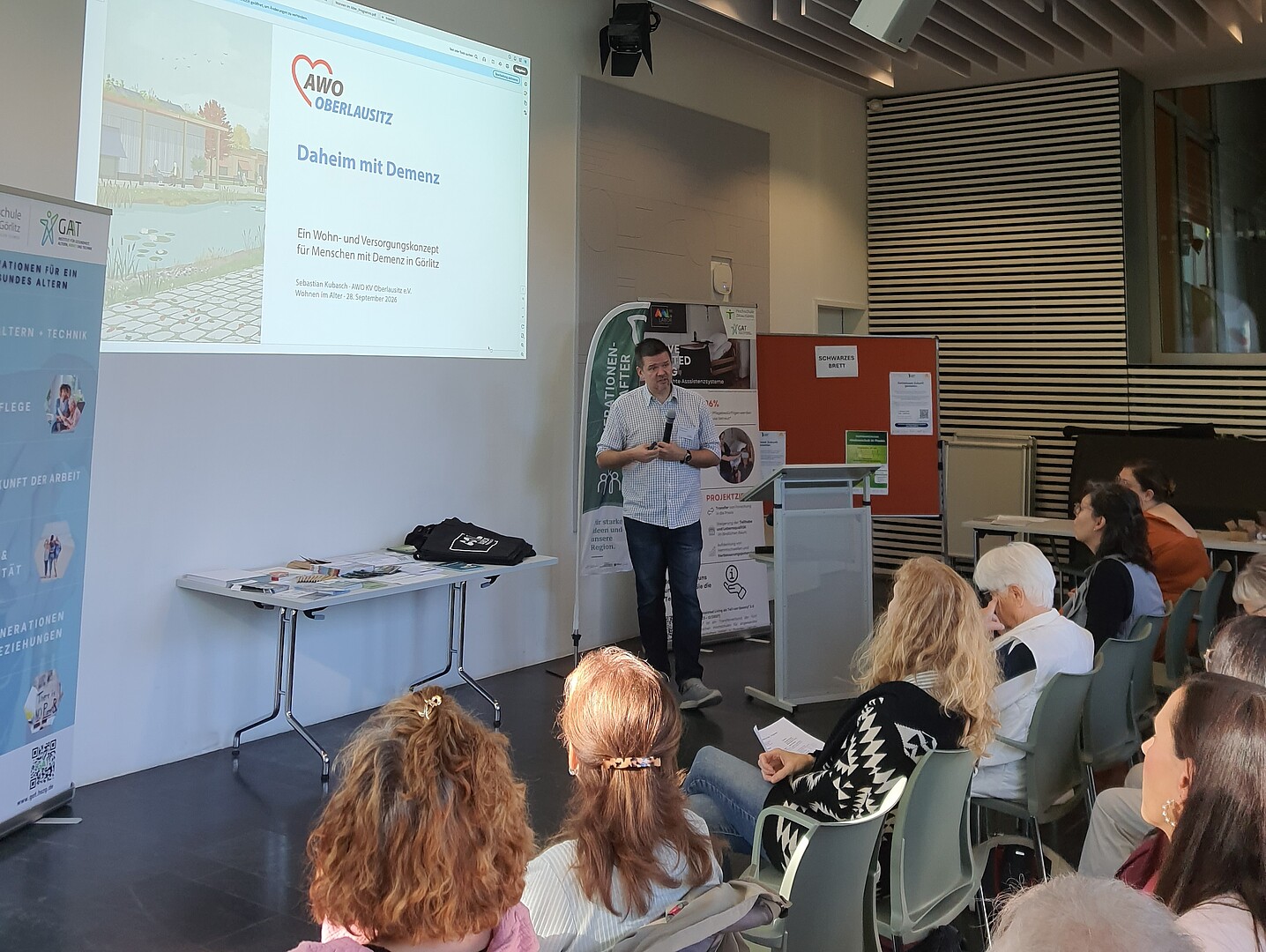
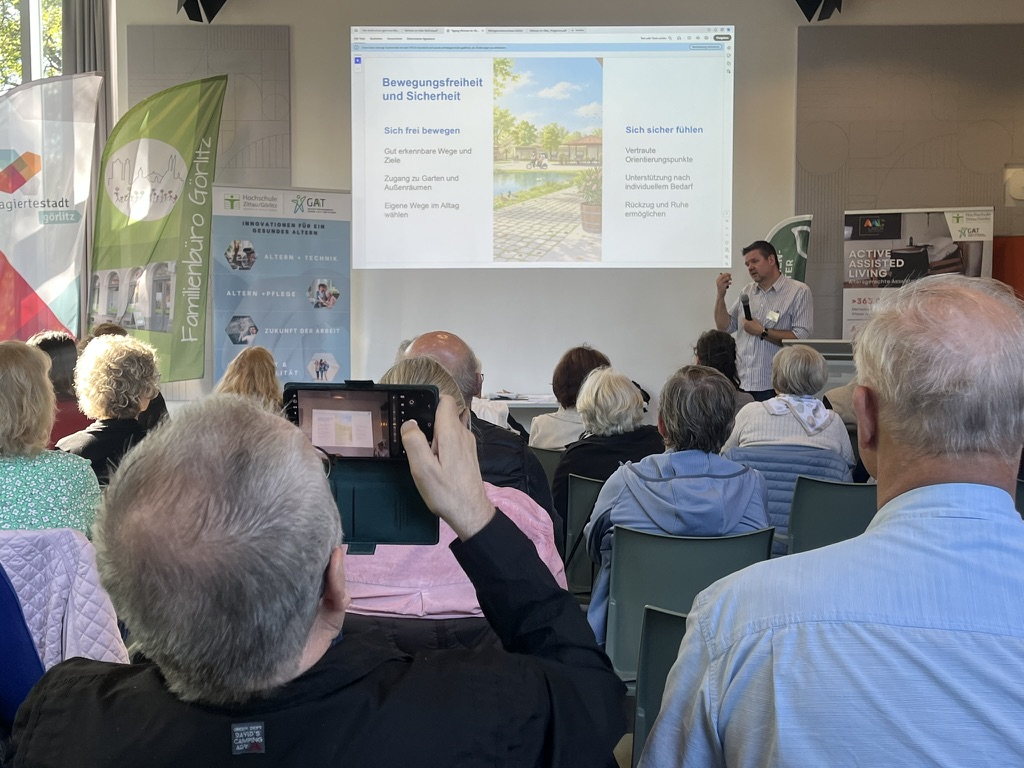
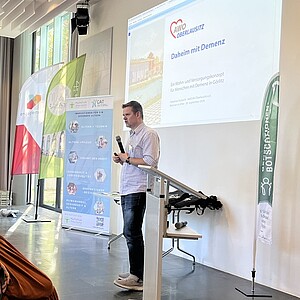
People with dementia need a home where familiar routines, relationships, and the ability to make their own decisions remain a part of their lives, even as their need for care increases. Through the project “At Home with Dementia—A Housing and Care Concept for People with Dementia in Görlitz” by the AWO Oberlausitz District Association, we aim to demonstrate how housing, care, and community participation can be integrated within the context of our region.
”Block 2: Life in the Neighborhood—The Neighborhood as a Resource
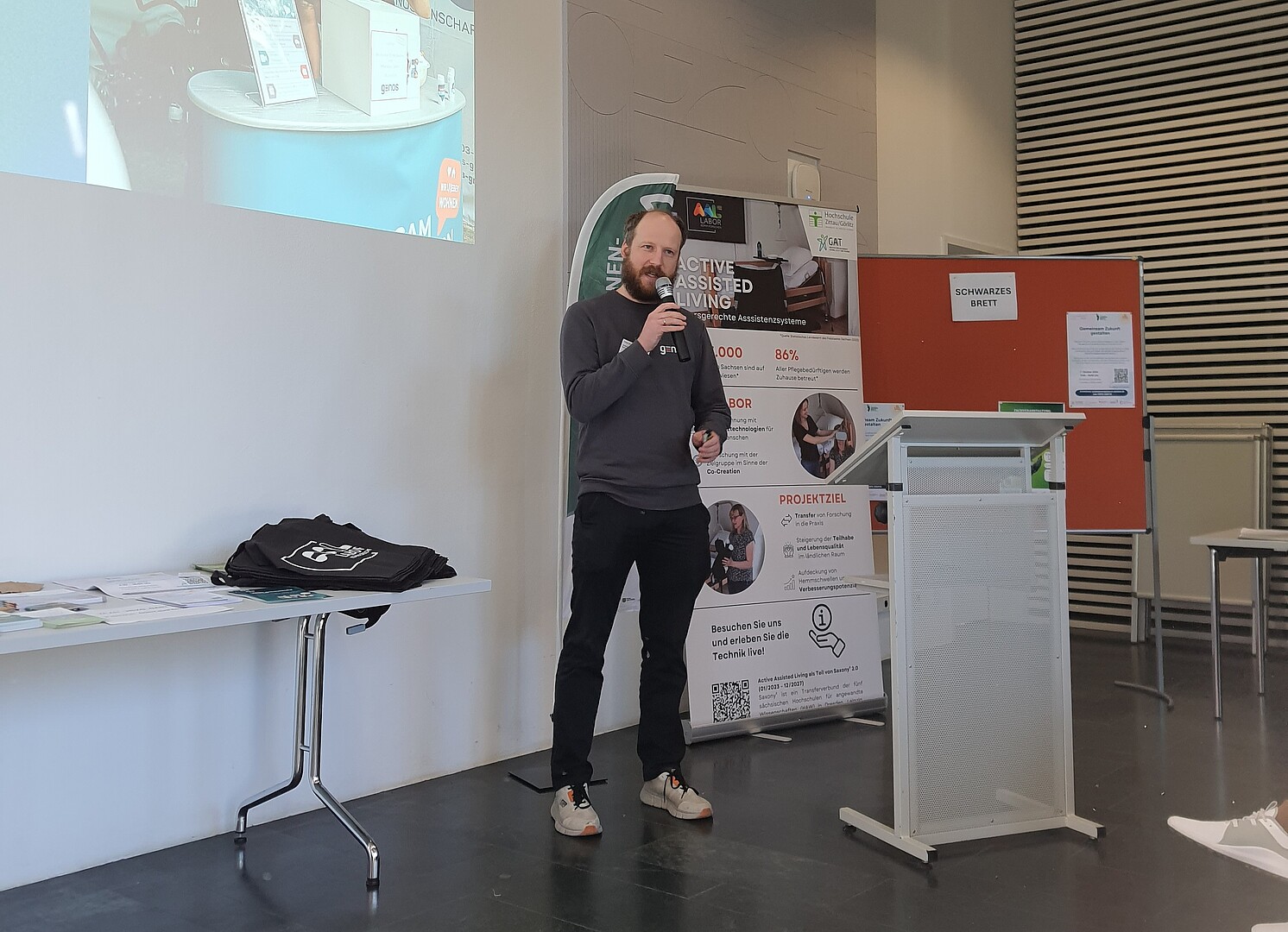
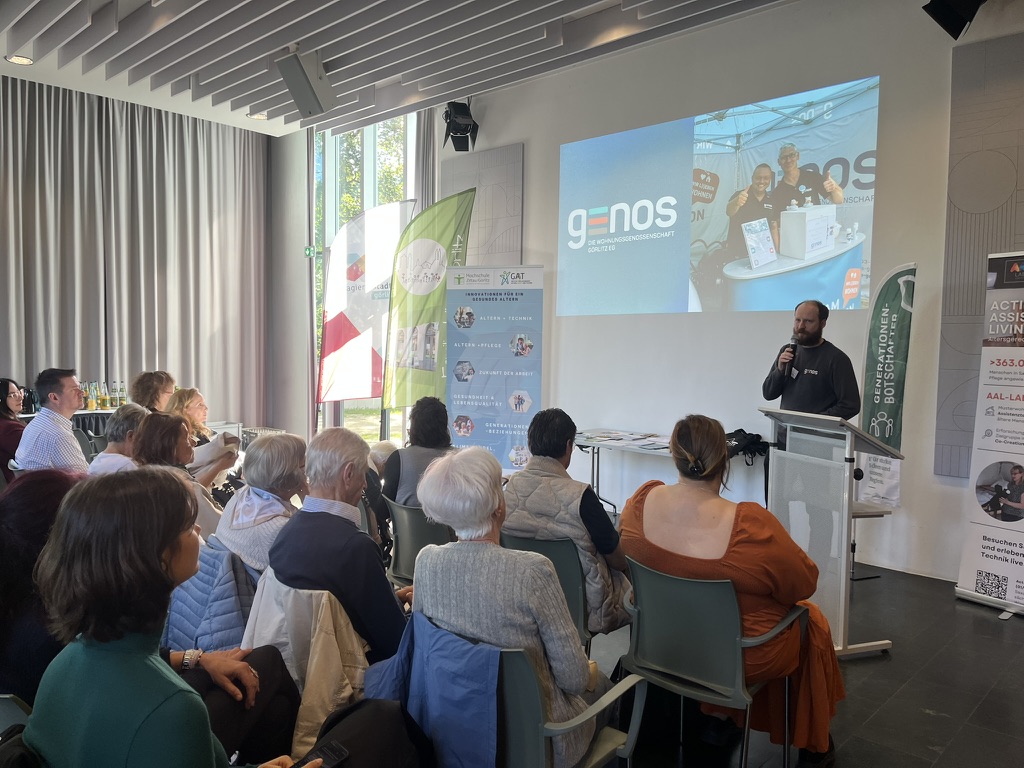
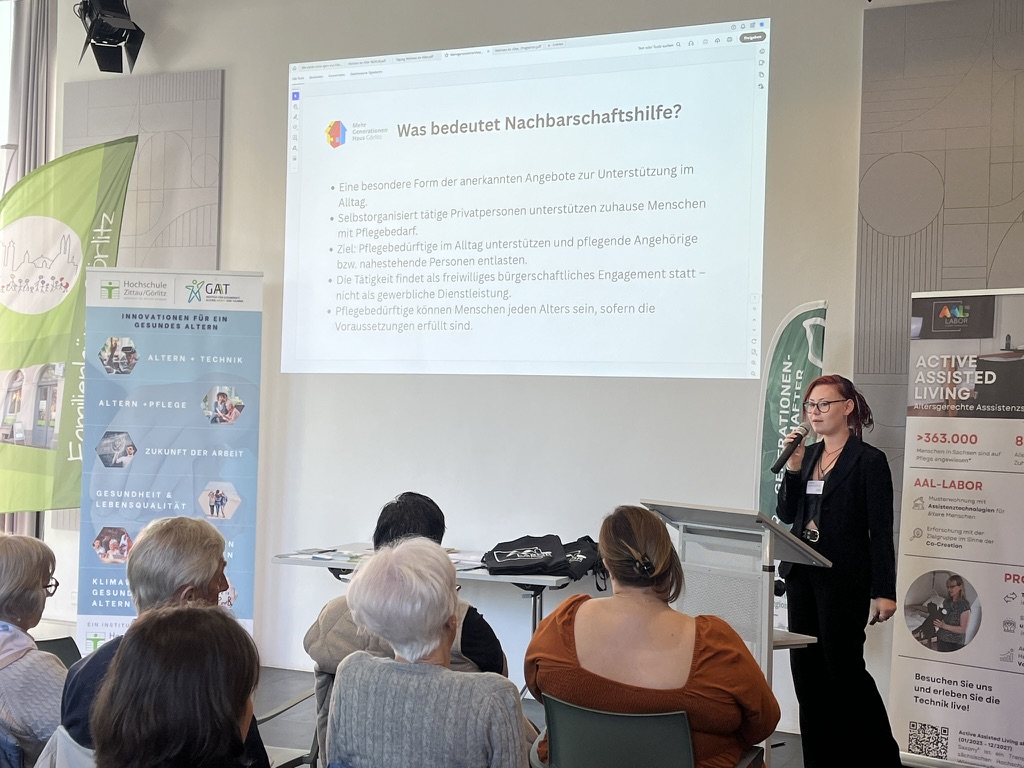
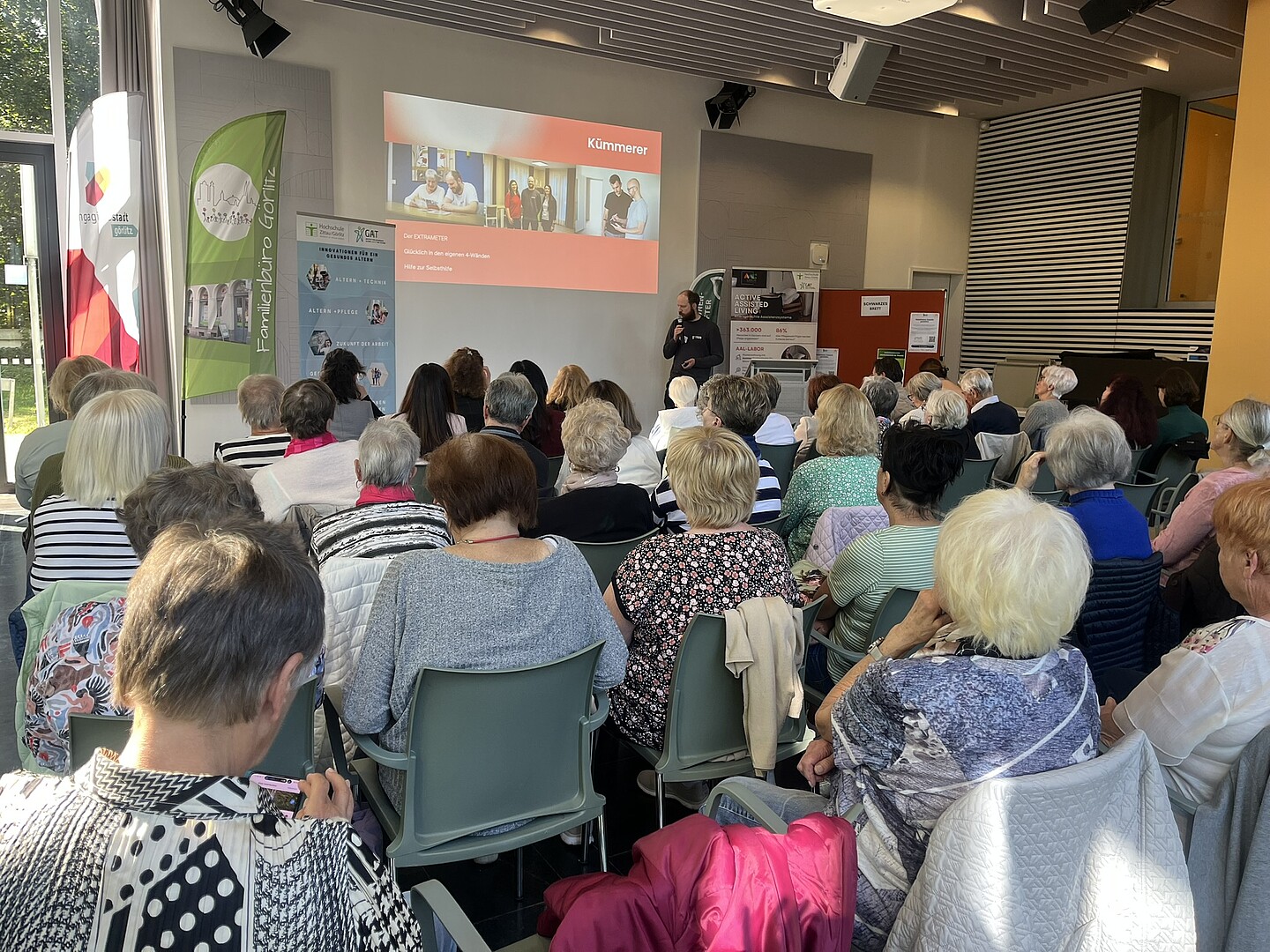
The second session shifted the focus from the living space to the surrounding neighborhood. Philipp Schmidt (Genos) introduced the concept of the “Kümmerer”: a professional who works specifically within the neighborhood to strengthen neighborhood networks and connect people with one another. Lena Wallnitz then presented the Görlitz Multigenerational House and theneighborhood assistance practiced there as a concrete example of how cross-generational support in everyday life can work.
Both presentations made it clear that social inclusion and mutual support cannot be taken for granted. They require structures, places, and people to sustain them.
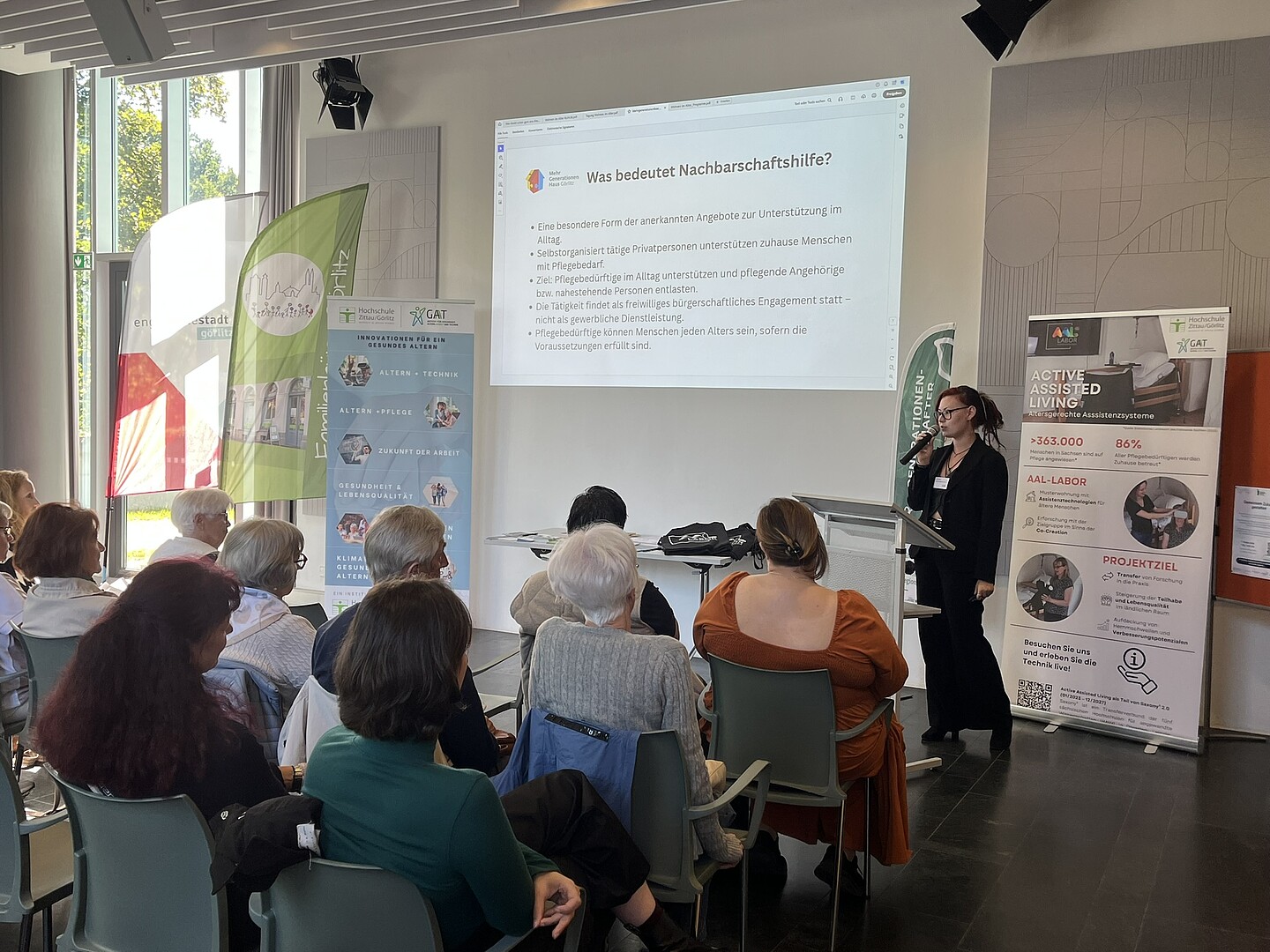
Block 3: Accessibility and Digital Support
In the concluding part of the seminar, two practical areas of action were highlighted.
Elvira Mirle, Inclusion Officer for the Görlitz District, provided information on barrier-free living and home modifications as well as the associated financing options. This is a topic that is concrete and urgent for many people, but one that is still not discussed enough.
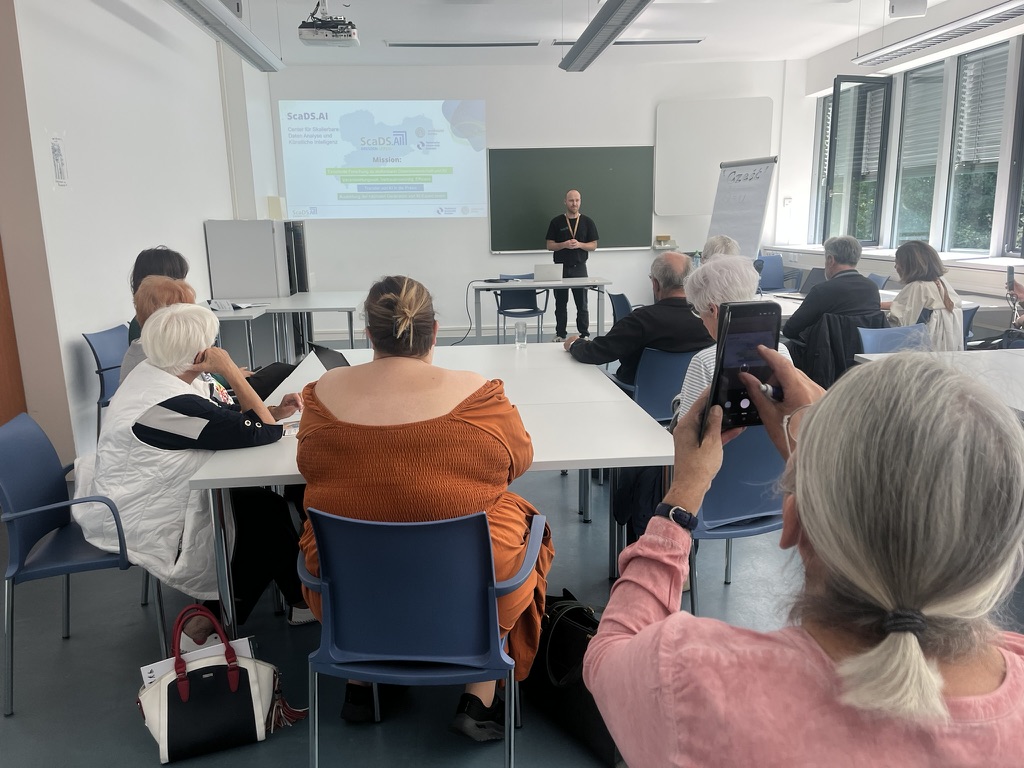
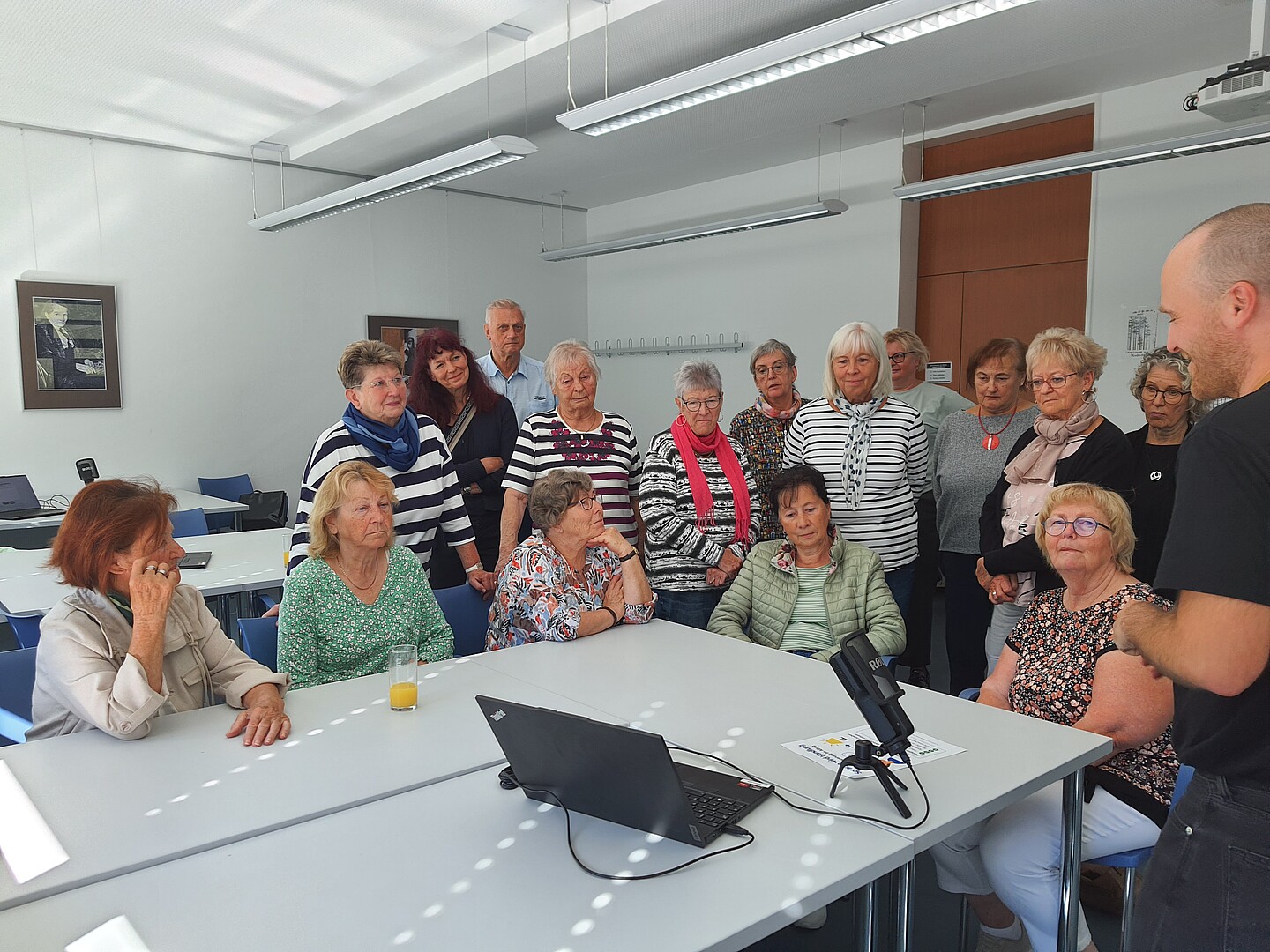
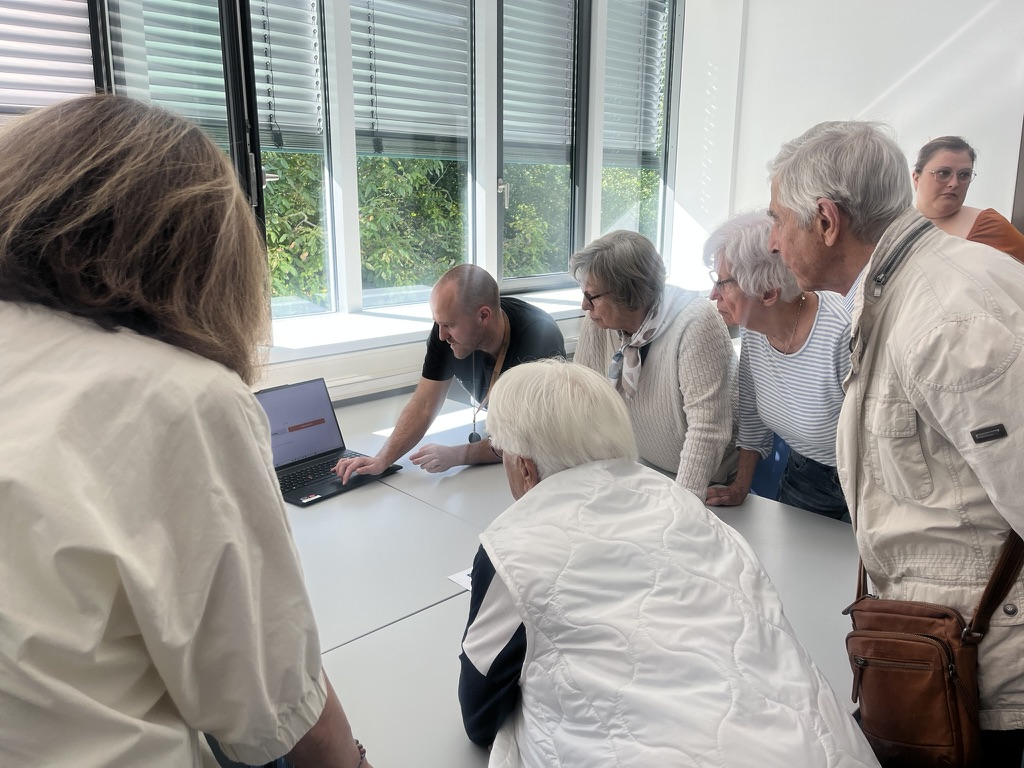
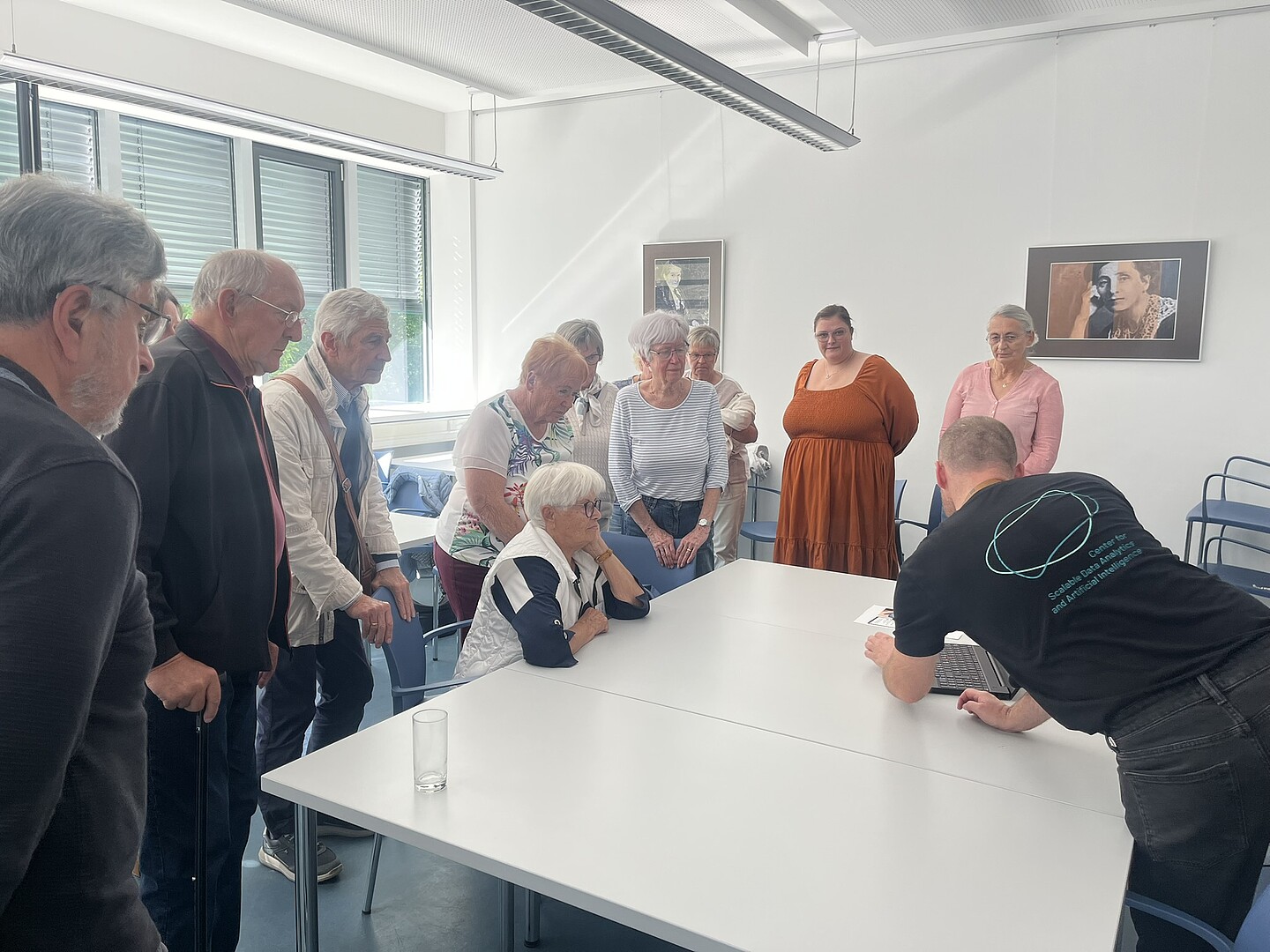
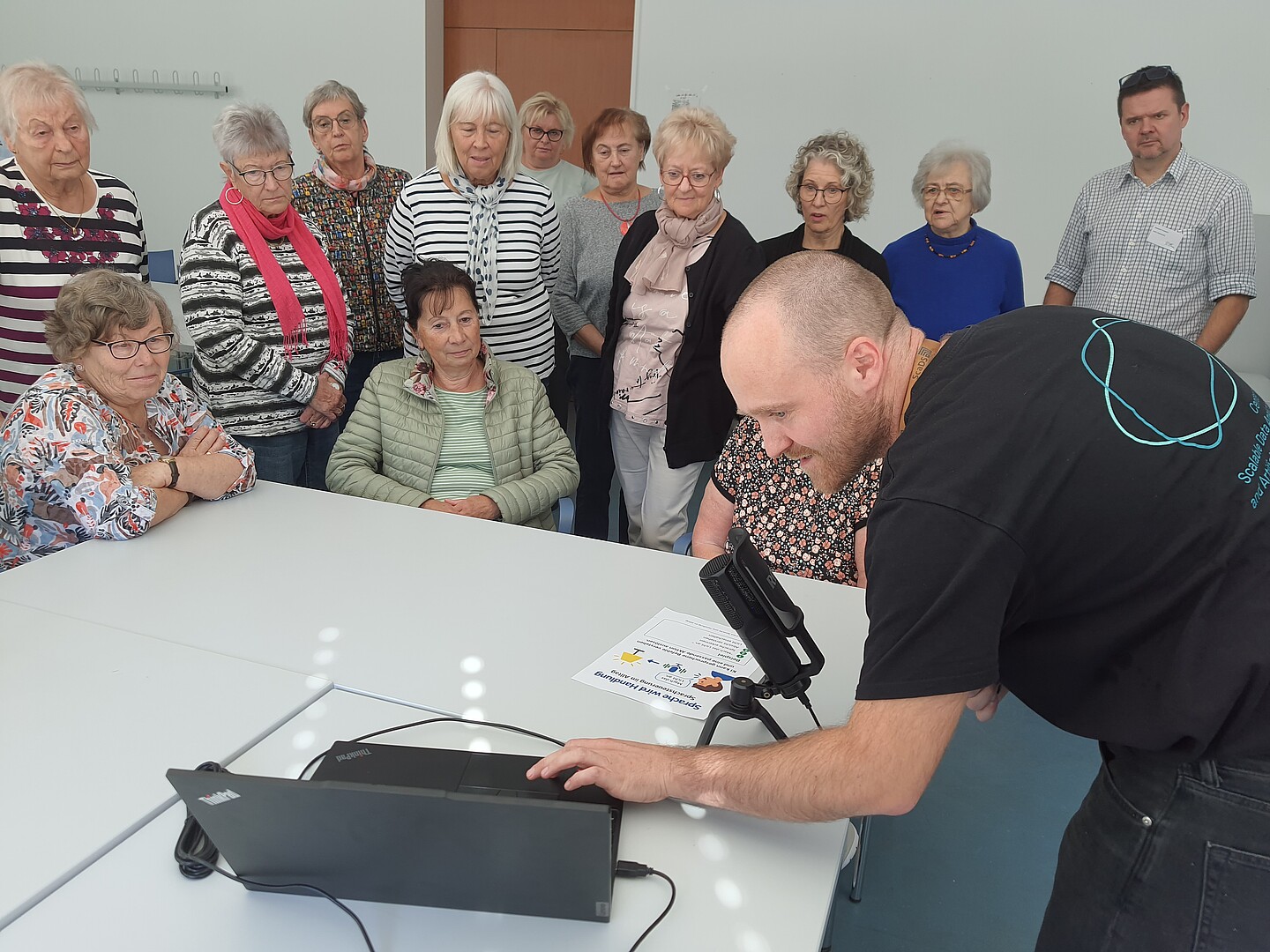
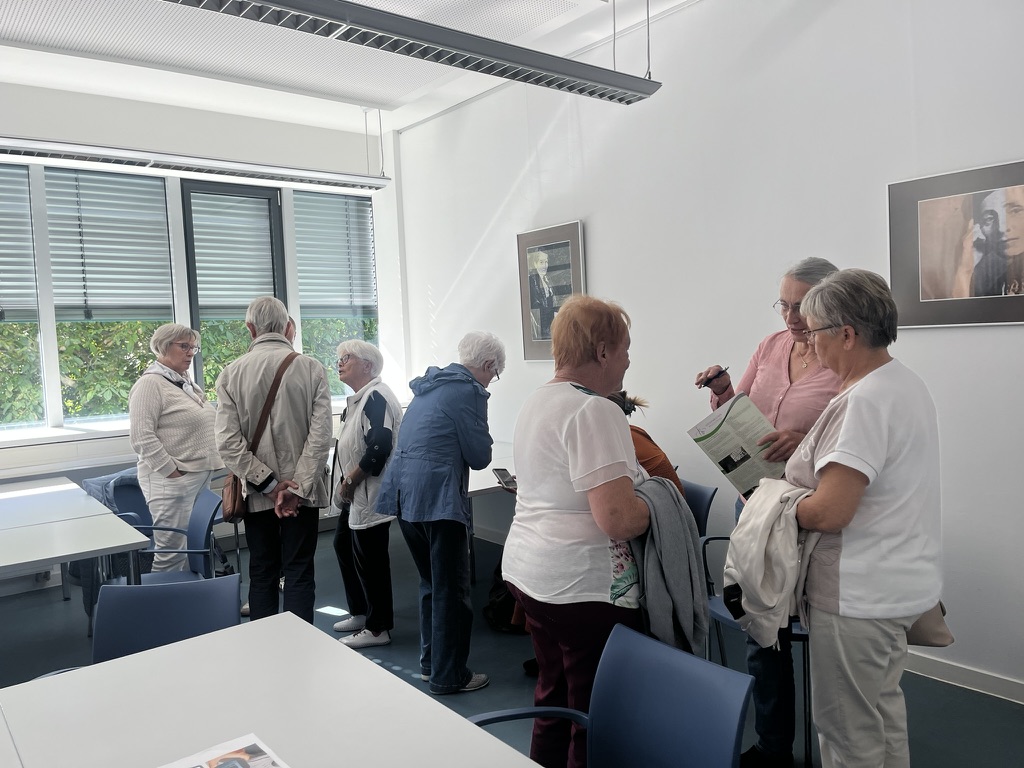
Oliver Welz from the Center for Scalable Data Science and Artificial Intelligence (ScaDS.AI) concluded by demonstrating the possibilities that artificial intelligence can offer in the daily lives at home of older adults. His presentation sparked curiosity and a lively discussion, and made it clear that digital support can promote independence when it is designed to be low-threshold and people-centered.
Conclusion
The third theme day demonstrated that the issue of housing for older adults has many dimensions: structural, social, financial, and technical. The strong response and lively discussions confirm the need for such networking events in the region. The GAT Institute, together with its partners, plans to continue the series during the project’s final year.
The event is part of the collaborative project Saxony5.
“Housing for older adults is not just a matter of housing—it is about participation, dignity, and a supportive social environment. This theme day has shown just how many creative approaches already exist and how important it is to bring together academia, practitioners, and civil society in this effort.”
”
Housing for seniors is, of course, a concern for us seniors. I think it’s particularly important that the GAT addressed this issue. Through presentations by KommWohnen, GENOS, and various organizations, the event showed us the efforts being made in our beautiful city to make life in old age worth living. Thank you for the excellent organization.
”![[Translate to Englisch:] Teilnehmende schauen zur Leinwand und den Rednerinnen](/fileadmin/_processed_/d/6/csm_Design_ohne_Titel_Kopie_dc34ad5ff8.png)
![[Translate to Englisch:] Teilnehmende schauen zur Leinwand und den Redner:innen](/fileadmin/_processed_/1/b/csm_D296C3CE-6721-4BF5-905D-59EAFC6A1834_1_102_o_e4201514aa.jpeg)
![[Translate to Englisch:] Teilnehmende schauen zur Leinwand und dem Redner](/fileadmin/NEU/Redaktion-GAT/Meldungen/Wohnen_im_Alter/CCBBFC9A-DE27-4F9C-BF16-8BE06F18D4F2_1_105_c.jpeg)

2.Obergeschoss