
Event details
From Border Region to Interconnected Region: Research Perspectives on Regional Cooperation
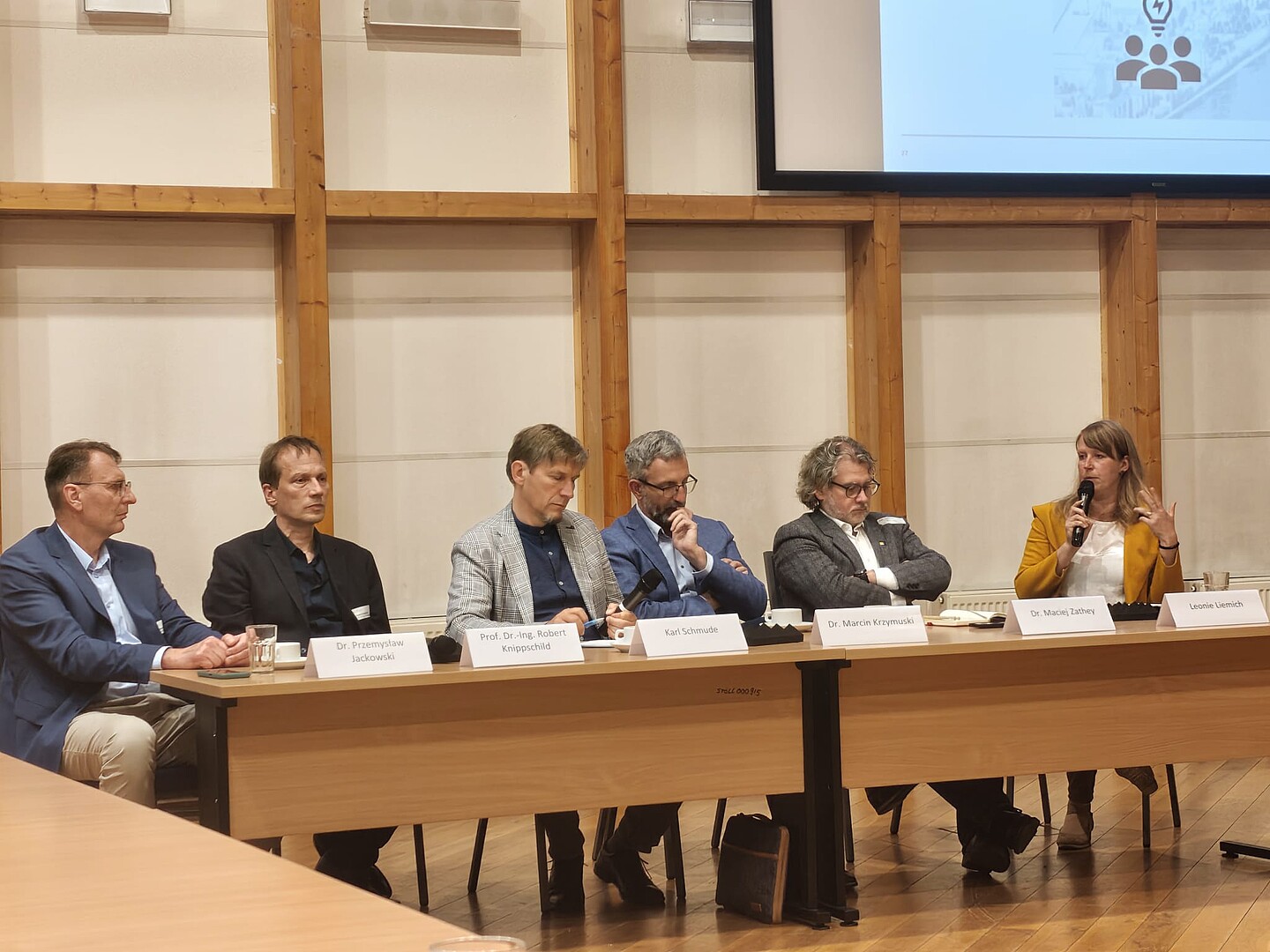
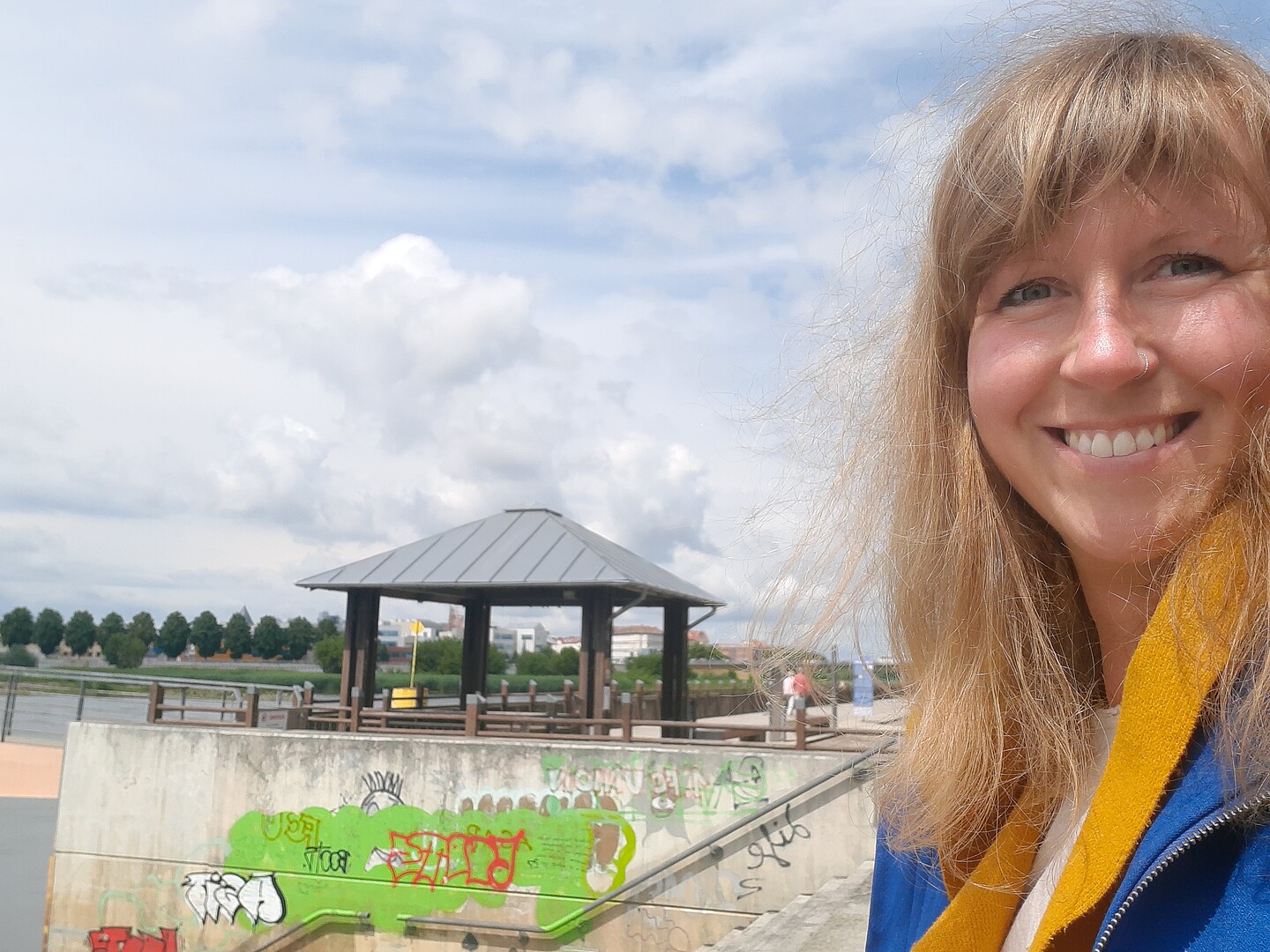
TRAWOS Member Leonie Liemich at the Spring Conference of the Academy for Spatial Development of the Leibniz Association
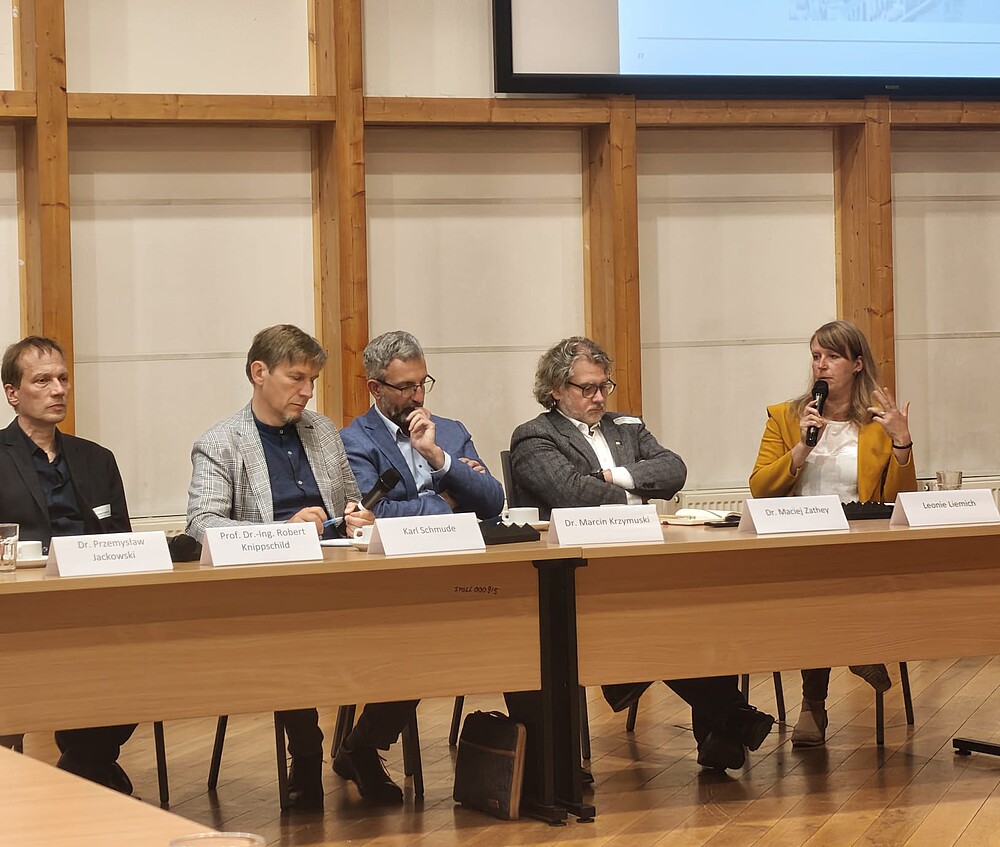
TRAWOS researcher Leonie Liemich presents research findings from the L&T project at the ARL Forum in Słubice
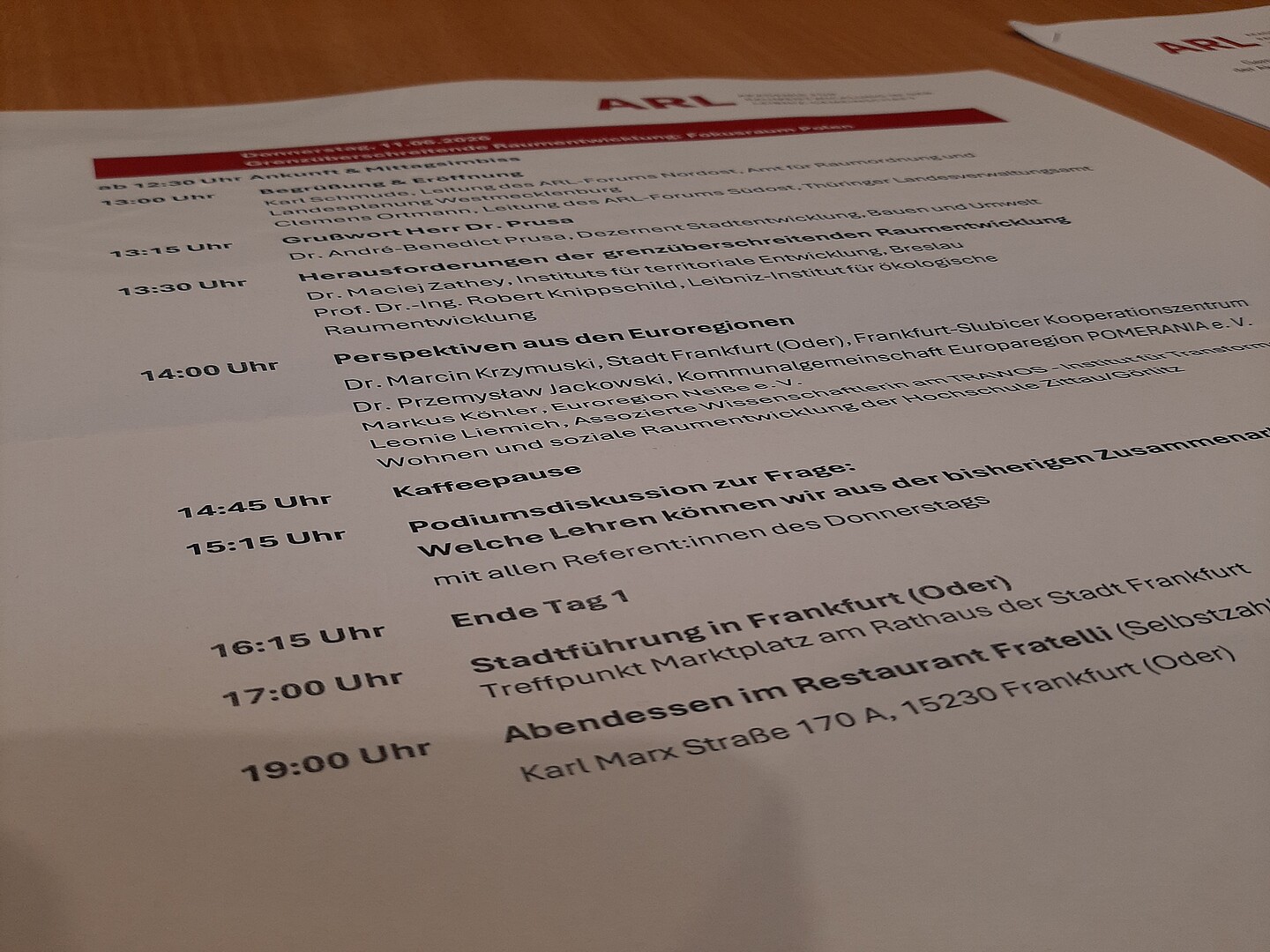
How can cross-border and regional cooperation succeed in the long term? What role do academia, small and medium-sized enterprises (SMEs) and international partners play in this? And how can individual research and development projects give rise to lasting collaborations? Leonie Liemich, an associate researcher at TRAWOS – the Institute for Transformation, Housing and Social Spatial Development at Zittau/Görlitz University of Applied Sciences – addressed these questions at the joint spring conference of the North-East and South-East Regional ARL Forums on 11 and 12 June 2026 at the Collegium Polonicum in Słubice (Poland).
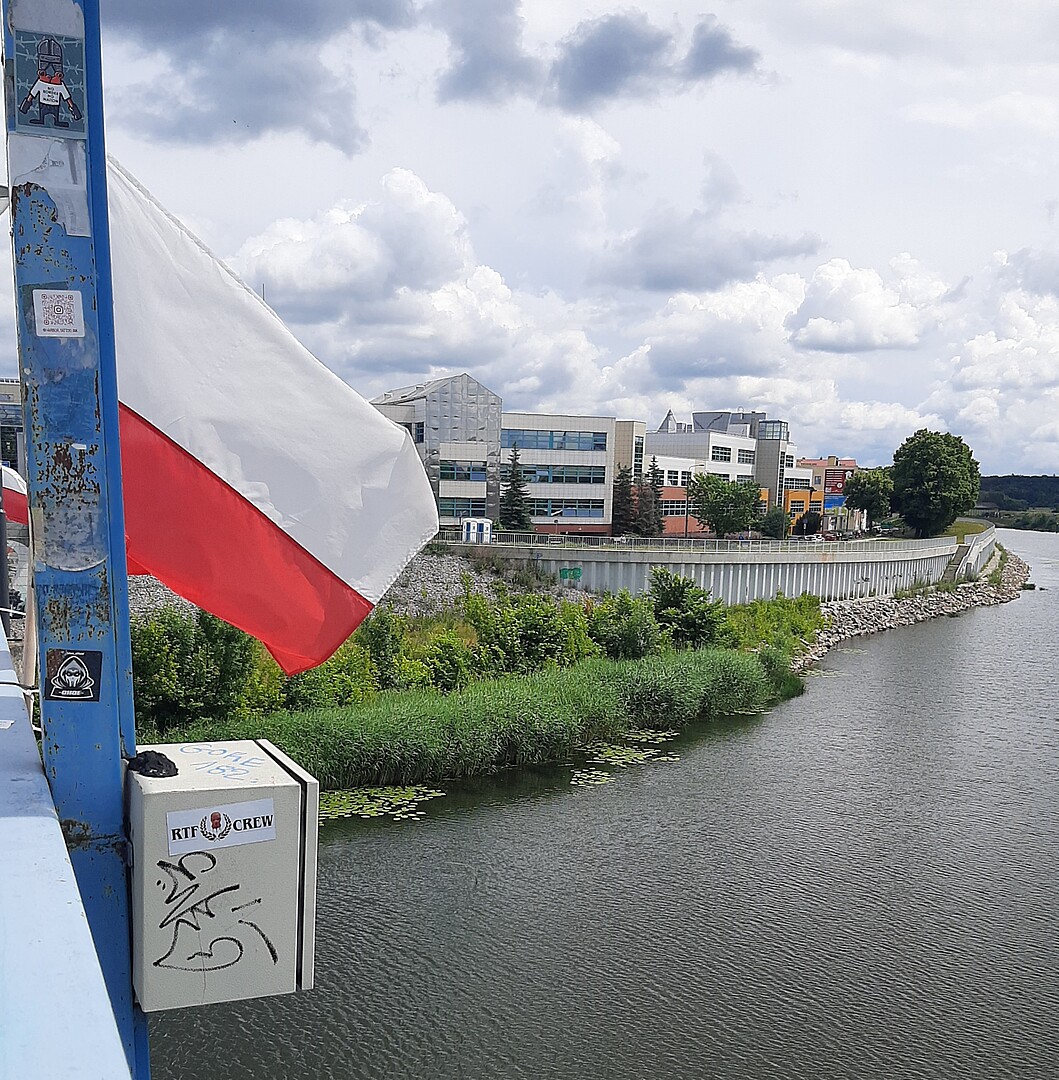
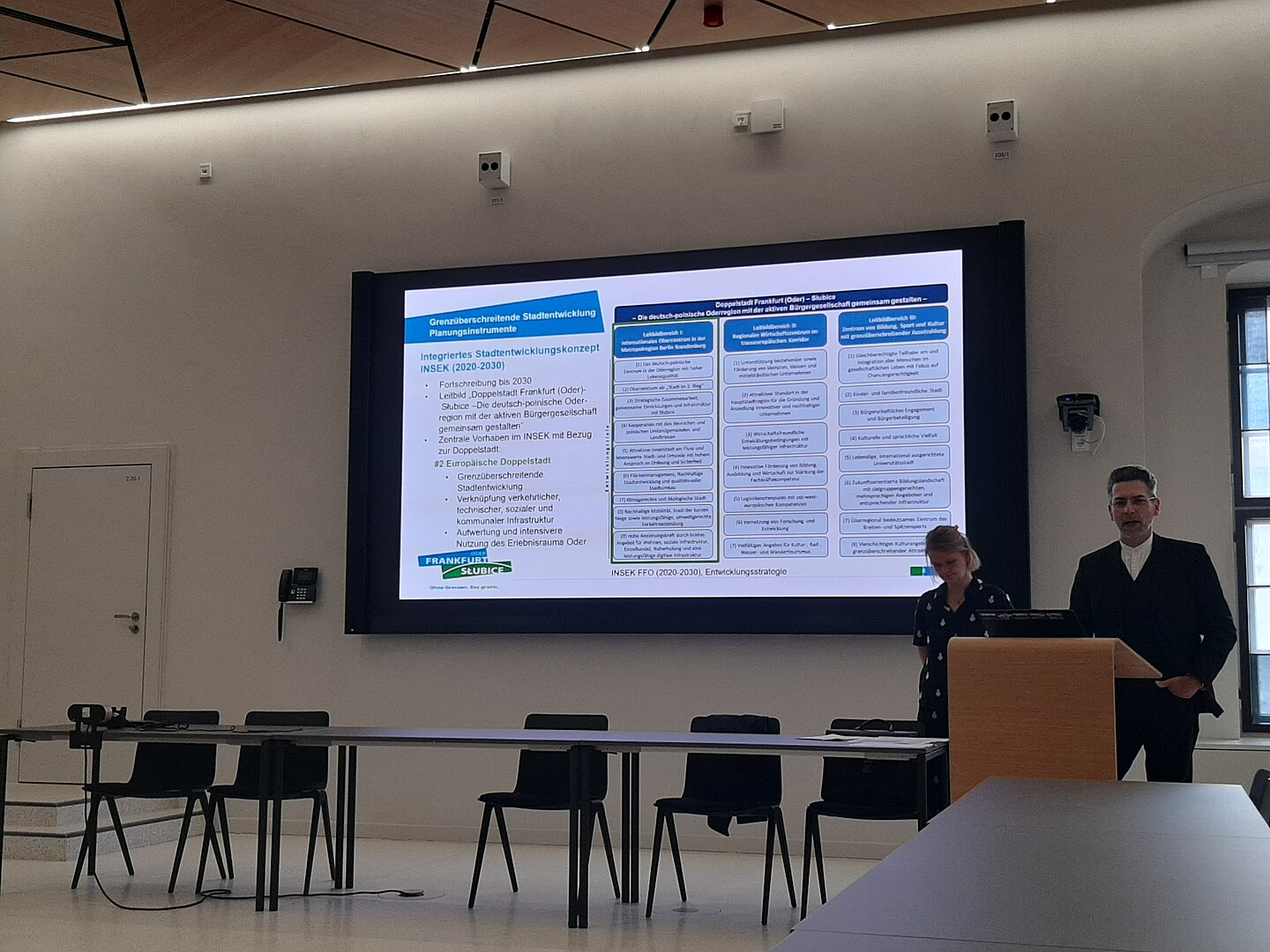
Under the title ‘From Border Region to Interconnected Region – Cross-border Spatial Development between Poland and Germany’, experts from academia, planning practice and public administration came together to discuss the potential and challenges of German-Polish cooperation. The focus was on a shift in perspective: border regions should increasingly be understood as shared interconnected spaces, where functional relationships, common challenges and cross-border potential take centre stage.
Science as a platform for regional collaboration
In her presentation, Leonie Liemich outlined research findings from the Lausitz – Life & Technology regional innovation alliance, focusing in particular on the importance of collaboration between the scientific community, regional businesses and international partners. Research and development projects can provide important impetus for new networks and joint activities in the region.
The discussion centred, amongst other things, on the following questions:
- What new collaborations can emerge from research and development projects in the region?
- What conditions are necessary for project-related contacts to develop into long-term and sustainable collaborations?
- What challenges exist in regional research collaborations – particularly at the interfaces between science, industry and different institutional systems?
- Which future-oriented topics offer particular opportunities for joint research and innovation, such as energy storage and new manufacturing technologies?
It became clear that cooperation does not arise solely through formal structures. Rather, personal relationships, trust, regular exchange and specific joint projects are crucial. Research and development projects, in particular, can play an important role in this regard: they create spaces in which stakeholders from different institutional and disciplinary contexts can work together on specific challenges and build new skills.
From individual projects to a shared space of interconnection
The discussions at the ARL Forum showed that these findings are also of great significance for cross-border cooperation. Differences in administrative structures, planning systems, legal frameworks, technical terminology and language barriers continue to pose challenges for cooperation between Germany and Poland. At the same time, it became clear that numerous successful projects are already demonstrating the potential that lies in closer integration. Whether in the areas of mobility, climate adaptation, healthcare, regional innovation or economic value chains – joint projects can help to ensure that borders are increasingly seen in everyday life as points of connection rather than dividing lines. Sustainable cooperation requires both institutional and strategic frameworks, as well as concrete projects and personal networks. It is particularly important to further develop existing partnerships once individual funded projects have been completed and to embed them permanently within regional structures.
Working together on issues for the future
With a view to the region’s future development, new technological and societal challenges are becoming increasingly important. Issues such as energy storage, new manufacturing technologies, climate adaptation and regional innovation capacity open up new opportunities for cooperation between academia, industry and public sector stakeholders – even across national borders. The conference in Słubice made it clear that: The transition from a border region to an interconnected region is a long-term process. Research and innovation can provide important impetus in this regard by bringing together different stakeholders, facilitating shared learning and initiating new collaborations. For the TRAWOS Institute, the combination of regional transformation, research and collaborative spatial development thus offers important starting points for further academic and practical work in the region.
Here you will find Leonie Liemich’s presentation
“From a border region to an interlinked region – Cross-border spatial development between Poland and Germany”, 11–12 June 2026, Collegium Polonicum, Słubice.
Further information here: https://www.arl-net.de/de/blog/vom-grenzraum-zum-verflechtungsraum
You can contact Leonie Liemich via the TRAWOS Institute


2. Obergeschoss