

Event details
Nearby. A small-town utopia?
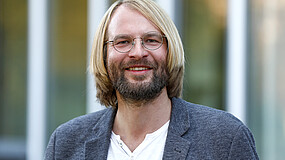
Small towns caught between the past and the future: A conversation with Simon Strauß
| Begin |
22. April 2026 -
18:00 |
| End | 22. April 2026 - 22:00 |
![[Translate to Englisch:] Plakat Kleinstadt](/fileadmin/_processed_/8/d/csm_In_der_N%C3%A4he_Plakat_Theater_G%C3%B6rlitz_END_6cb0068463.jpg)
Is the small town a place of the future: a place where the shape of society can be both observed and shaped? Long neglected by politicians and the media, it is now precisely the ‘provinces’ – the villages and small and medium-sized towns in rural areas – that are receiving a surge of attention. Here, as if under a magnifying glass, we can observe pressing issues and problems that are driving societal change and transformation: be it demographics and public services, or migration and social cohesion; be it coming to terms with one’s own past, the importance of community, or the relationship between East and West, city and countryside, centre and periphery.
But: how and from what perspectives do we view the lived environments of small towns? What can be learnt from the experiences of small-town residents for the concerns of society as a whole? We will be addressing these and other questions at Apollo together with author and FAZ journalist Simon Strauß on the occasion of his latest book In der Nähe – bringing literary, social and planning science perspectives into dialogue with history and the present.
Programme
18:00 Welcome and introduction: Utopias and dystopias of the small town – literature, planning, society
18:15 Marc Weiland: Fictions of manageability. Small towns in literature and the media
18:30 Heidi Pinkepank: Short distances, multifunctional spaces, social manageability – the small town from an urban planning perspective
18:45 Julia Gabler: Presence: close by from a distance. A sociological commentary
Break
19:30 Simon Strauß reads from “In der Nähe. Vom politischen Wert einer ostdeutschen Sehnsucht”
Followed by: Panel and audience discussion
Contributors
Julia Gabler is a sociologist and has been conducting research since 2015 at the Institute for Transformation, Housing and Social Spatial Development at Zittau-Görlitz University of Applied Sciences, focusing, among other things, on structural change processes and regional development. In this capacity, she has led several research projects and initiated participatory processes. Her dissertation focused on shrinking industrial cities.
Heidi Pinkepank is the managing director of the Institute for New Industrial Culture (INIK) GmbH. She studied landscape architecture in Erfurt and Vilnius, as well as World Heritage Studies at the BTU Cottbus. At INIK, Heidi’s work focuses, among other things, on post-mining landscapes in Lusatia, people returning to small towns and the role of culture in structural change.
Simon Strauß is a writer and journalist for the Frankfurter Allgemeine Zeitung. He studied classical studies and history in Basel, Poitiers and Cambridge and is a co-founder of the group Arbeit an Europa. His most recent literary works are "Sieben Nächte" (2017), "Römische Tage" (2019), and "Zu Zweit" (2023). "In der Nähe" (2025) is his first nonfiction book, for which he conducted extensive research in the small Brandenburg town of Prenzlau.
https://www.klett-cotta.de/produkt/simon-strauss-in-der-naehe-9783608502718-t-9294
Marc Weiland is an adjunct professor of literary studies at Zittau-Görlitz University of Applied Sciences and has been studying literary and media narratives of rural areas for several years. He is the founder of the book series "Rurale Topografien" published by Transcript-Verlag and has edited, among others, the books "Topografische Leerstellen" (2018), "Kleinstadtliteratur" (2020) and "Die Zukunft auf dem Land" (2022).
https://f-s.hszg.de/personen/professorinnen-der-fakultaet/vertr-prof-dr-marc-weiland
2. Obergeschoss